Start at the top for an easy introduction. Go further down for more detail and scholarship.
- Easy
- Intermediate
- Advanced
For young readers
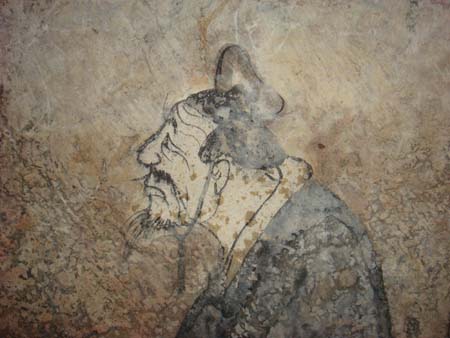
About 2,500 years ago, in a small country in eastern China called Lu, there lived a man named Kong Qiu. Today most people know him as Confucius, which comes from “Kong Fuzi,” meaning “Master Kong.” His father died when he was very young, and his family was not rich, but he loved to learn.
At that time China was split into many kingdoms that were often fighting. Rulers cared more about power than about their people. Confucius thought: what if leaders were good people, like a kind parent? Then everyone would want to follow their example, just as younger children copy an older brother or sister they admire.
Confucius became a teacher. He taught anyone who truly wanted to learn, rich or poor. He said the most important thing is ren—being truly kind and caring toward other people. One of his most famous sayings is: “Do not do to others what you would not want done to yourself.”
He also taught li, which means good manners and respectful ways of doing things, like bowing, saying thank you, and honouring your parents and grandparents. He believed these little habits help people get along, the way rules in a game help everyone play fairly.
Confucius did not write a book himself. After he died, his students wrote down the things he said in a book called the Analects. That little book has been read by children and grown-ups in China, Korea, Japan, Vietnam and many other places for over two thousand years.
At a glance
- Lived
- 551–479 BCE (traditional dates; some ancient sources give 552 BCE for his birth)
- Place
- State of Lu, near modern Qufu, Shandong Province, China
- Period
- Late Spring and Autumn period of the Eastern Zhou dynasty
- Role
- Teacher, minor official, political adviser; founding figure of the Ru (Confucian) tradition
- Main source
- The Analects (論語 Lunyu), a collection of his sayings and conversations compiled by later disciples
- Key ideas
- Ren (humaneness), li (ritual propriety), junzi (the exemplary person), filial piety, government by virtue
- Language
- Classical (Old) Chinese
- Legacy
- Confucianism shaped ethics, education, family life and government across East Asia for over two millennia
Easy
Who was Confucius?
Confucius (551–479 BCE) was a Chinese teacher and thinker whose ideas became the foundation of one of the world’s most influential ethical and political traditions. His family name was Kong and his personal name Qiu; his disciples called him Kongzi, “Master Kong.” The Latin form “Confucius,” from Kong Fuzi, was popularized by European Jesuit missionaries in the seventeenth century.
He did not found a religion in the usual sense, lead an army or rule a state. He held modest official posts, travelled among rival courts looking for a ruler who would put his ideas into practice, and spent much of his life teaching. His goal was to restore a harmonious social order based on moral character, respectful relationships and the rituals of the early Zhou dynasty, which he saw as a golden age.
Confucius described himself as a transmitter rather than an inventor: “I transmit but do not create; I trust and love the ancients” (Analects 7.1). Yet by reinterpreting old traditions he created something new—an ethics centred on personal cultivation, learning and humaneness that anyone, not only nobles, could pursue.
Easy
His life
According to the Records of the Grand Historian (Shiji) by Sima Qian, written about four centuries later, Confucius was born in Zou, near Qufu in the state of Lu. His father, Shuliang He, was an elderly warrior of low aristocratic rank who died when Confucius was about three; his mother, Yan Zhengzai, raised him in modest circumstances. In the Analects he recalls that because he was poor when young he became skilled in many humble tasks.
As a young man he worked as a keeper of granaries and of livestock for a powerful family. He became known for his knowledge of ritual and the ancient texts, and students began to gather around him. The Analects preserves his own summary of his development: at fifteen he set his heart on learning; at thirty he took his stand; at forty he had no doubts; at fifty he understood the mandate of Heaven; at sixty his ear was attuned; at seventy he could follow his heart’s desire without overstepping what was right (Analects 2.4).
Tradition says that around 500 BCE he rose to high office in Lu, becoming Minister of Crime (sikou). Historians debate how important his role really was. About 497 BCE he left Lu, disappointed with its rulers, and spent roughly fourteen years travelling through states such as Wei, Song, Chen and Cai. He was sometimes in danger and often ignored, and no ruler gave him the lasting position he hoped for.
Around 484 BCE he returned to Lu, where he devoted himself to teaching and, according to tradition, to editing ancient texts. His last years were marked by grief: his son Kong Li and his favourite disciple Yan Hui died before him, as did the loyal Zilu. He died in 479 BCE and was buried north of Qufu, where the Kong family cemetery still stands.
Intermediate
Historical context: a world coming apart
Confucius lived at the end of the Spring and Autumn period (770–476 BCE, named after the chronicle of Lu). The Zhou kings, who had once ruled through a network of related lords, had lost real power after moving their capital east in 771 BCE. Dozens of states competed, formed alliances and fought wars; within states, ministerial families often dominated their nominal rulers. In Lu, three noble houses descended from Duke Huan—the Jisun, Mengsun and Shusun—held effective power.
This political disorder was also a crisis of values. The rituals and ranks of Zhou society still existed, but powerful men often used them for show or usurped rituals reserved for the king. Confucius was deeply offended, for example, when the Ji family performed a dance with eight rows of dancers, a privilege of the Son of Heaven (Analects 3.1). For him, the misuse of ritual reflected a loss of moral order.
Confucius’ lifetime overlaps with that of other great teachers across Eurasia—the Buddha in India, and early Greek philosophers such as Pythagoras. The philosopher Karl Jaspers later grouped such figures in an “Axial Age.” In China, Confucius was the first of the many thinkers of the “Hundred Schools of Thought” era that followed, including Mozi, Mencius, Laozi and Zhuangzi (as traditionally dated), and Xunzi.
Intermediate
Core teachings
Ren (仁), often translated as humaneness, benevolence or goodness, is the highest virtue in the Analects. When asked about it, Confucius gave different answers to different students, but they share a core: caring for others and reciprocity. He defined ren as “loving people” (12.22), and summarized the way of reciprocity (shu) as “what you do not wish for yourself, do not impose on others” (15.24). He also said that “restraining oneself and returning to ritual is ren” (12.1).
Li (禮) means ritual or ritual propriety—the whole body of ceremonies, manners and customs that govern behaviour, from sacrifices to ancestors to greetings between friends. Confucius taught that li is not empty formality: without inner sincerity and ren, ritual is meaningless, but without li, good intentions lack form. Ritual shapes people’s character through practice, much like music trains the ear.
The junzi (君子), originally meaning “son of a lord,” became in Confucius’ usage the exemplary or noble person—someone noble in character rather than by birth. He contrasted the junzi, who understands what is right (yi 義), with the xiaoren, the “small person” who thinks only of profit (4.16). Anyone could become a junzi through learning and self-cultivation.
Filial piety (xiao 孝), respect and care for parents and ancestors, was for Confucius the root of humaneness: someone who learns love and respect in the family will extend them to society. He also stressed loyalty (zhong 忠), trustworthiness (xin 信), and learning (xue 學). The Analects opens with “To learn and, at due times, to practise what one has learned—is that not a joy?” (1.1).
Intermediate
Government by virtue and the rectification of names
Confucius believed that good government depends on the moral quality of rulers rather than on harsh laws. “Guide the people with regulations and keep them in line with punishments, and they will avoid trouble but have no sense of shame; guide them with virtue and keep them in line with ritual, and they will have a sense of shame and set themselves right” (2.3). A virtuous ruler is like the Pole Star, which stays in its place while all the other stars turn around it (2.1).
The “rectification of names” (zhengming 正名) meant making words and roles match reality. When a duke asked about government, Confucius replied: let the ruler be a ruler, the minister a minister, the father a father, the son a son (12.11). If people holding a title do not fulfil its duties, language becomes confused and society falls into disorder (13.3).
These ideas were not simply conservative. Confucius insisted that rulers owe their people material welfare, education and good example, and that ministers should remonstrate with rulers who do wrong. Later Confucians, above all Mencius, developed this into the view that a ruler who loses the people’s support also loses the mandate of Heaven.
Intermediate
Confucius as teacher and his disciples
Confucius is often honoured as China’s first great private teacher. He said he never refused anyone who brought even a small gift of dried meat as tuition (7.7), and that in teaching there should be no distinctions of class (15.39). Tradition claims he had some 3,000 students, of whom 72 mastered the “six arts”; these numbers are symbolic, but he certainly taught many people of different backgrounds.
His method was conversational and personal. He adapted his answers to each student’s character, encouraged them to think for themselves, and expected them to draw conclusions: “If I raise one corner and a student cannot come back with the other three, I do not repeat myself” (7.8). He taught ritual, music, history, poetry (the Classic of Poetry was central), and the arts of government.
Several disciples became famous in their own right: Yan Hui, admired for his virtue and love of learning despite his poverty; Zilu, brave and impulsive; Zigong, eloquent and successful in diplomacy and business; Zengzi, associated with filial piety; and Zixia and Ziyou, associated with the transmission of texts and ritual. After Confucius’ death, his disciples and their students formed competing lines of teaching.
Intermediate
The Analects and other texts
The Analects (Lunyu, “Selected Sayings”) is a collection of about 500 short passages in twenty books (pian). Most are brief sayings introduced by “The Master said,” along with conversations with disciples and rulers and descriptions of Confucius’ behaviour. The passages are not arranged as a systematic treatise; each book gathers loosely related material.
The Analects was not written by Confucius. It was compiled by later generations of disciples over a long period, probably from the fifth to the third century BCE. In the Han dynasty three versions circulated—the Lu, Qi and “Old Text” Analects. In the first century BCE the scholar Zhang Yu produced a combined version based mainly on the Lu text, and later editions derive largely from this tradition.
Tradition also credited Confucius with editing the Five Classics—the Classic of Poetry, the Book of Documents, the Book of Rites, the Book of Changes (to which he was said to have added commentaries called the Ten Wings) and the Spring and Autumn Annals (which he was said to have written). Modern scholars generally doubt most of these attributions, though Confucius clearly used and taught the Poetry and Documents.
Intermediate
From teacher to state orthodoxy
In the Warring States period (475–221 BCE), Confucians competed with Mohists, Daoists, Legalists and others. Mencius (c. 372–289 BCE) argued that human nature is good; Xunzi (c. 310–after 238 BCE) argued that it must be shaped by ritual and learning. The Qin dynasty (221–206 BCE) favoured Legalism, and Confucian scholars suffered during the burning of books in 213 BCE.
Under the Han dynasty, Confucian learning gained official status. In 136 BCE Emperor Wu established erudites (boshi) for the Five Classics, and in 124 BCE an Imperial Academy was founded to train officials in them. Sima Qian gave Confucius a “hereditary house” biography in the Shiji, an honour usually reserved for feudal lords. Temples to Confucius spread, and he received increasingly exalted imperial titles.
From the eleventh century, the Neo-Confucian movement reinterpreted Confucian teachings in response to Buddhism and Daoism, adding metaphysics of principle (li 理) and vital energy (qi 氣). Zhu Xi (1130–1200) grouped the Analects, Mencius, the Great Learning and the Doctrine of the Mean as the Four Books. From 1313 under the Yuan dynasty until the abolition of the civil service examinations in 1905, Zhu Xi’s commentaries on the Four Books formed the basis of the exams that selected China’s officials.
Intermediate
Confucius across East Asia and the world
Confucian learning reached Korea early: the Goguryeo kingdom established a national academy (Taehak) in 372 CE. Under the Joseon dynasty (1392–1897), Neo-Confucianism became the state ideology; the Seonggyungwan academy, founded in 1398 in the capital Hanyang (Seoul), still holds the Seokjeon Daeje ceremony honouring Confucius each spring and autumn. Korean thinkers such as Yi Hwang (Toegye) and Yi I (Yulgok) made major contributions to Neo-Confucian philosophy.
In Vietnam, the Temple of Literature in Hanoi was founded in 1070 to honour Confucius, and Confucian examinations were held there for centuries. In Japan, Confucian ideas entered with Chinese writing and Buddhism, and Neo-Confucianism became highly influential in the Tokugawa period (1603–1868), when the Yushima Seidō in Edo served as an official academy.
In the seventeenth century, Jesuit missionaries in China, beginning with Matteo Ricci, studied Confucian texts closely. A Latin translation of three of the Four Books, Confucius Sinarum Philosophus, was published in Paris in 1687. Enlightenment thinkers such as Leibniz and Voltaire admired what they took to be a rational, non-clerical morality—an image that says as much about Europe as about China.
In modern China, Confucius has been both attacked and revived. The May Fourth Movement (1919) blamed Confucian tradition for China’s weakness; the 1973–74 “Criticize Lin Biao, Criticize Confucius” campaign condemned him as a defender of slave-owning aristocrats. Since the 1980s his reputation has recovered, and in 1994 the Temple, Cemetery and Kong Family Mansion in Qufu were inscribed as a UNESCO World Heritage Site.
Advanced
Scholarly debates and open questions
The historical Confucius: Almost everything we know about Confucius comes from texts compiled after his death, and the fullest biography (Shiji 47) dates from about 100 BCE and mixes history with legend. Scholars disagree about how much of it to trust—for instance, whether he really held the post of Minister of Crime or played a decisive role at the meeting of Jiagu (500 BCE).
The formation of the Analects: E. Bruce Brooks and A. Taeko Brooks, in The Original Analects (1998), proposed an “accretion theory” in which the text grew layer by layer over about two centuries, with Book 4 as the earliest core. Others accept that the text is layered but doubt that its strata can be dated so precisely. Some scholars argue that the Analects reached its received form only in the Han dynasty; others see a largely pre-Qin text.
Interpretation: Is Confucius primarily an ethical thinker, a religious figure, or a political reformer? Herbert Fingarette’s Confucius: The Secular as Sacred (1972) emphasized the “magical” power of ritual to create community. Others emphasize Confucius’ reverence for Heaven (tian) and ancestral spirits, or read him in terms of virtue ethics or role ethics. Whether “Confucianism” is a religion is also debated, and the answer depends partly on how one defines religion.
“Confucianism” as a category: The English term “Confucianism” emphasizes one founder, but the Chinese term Ru (儒) referred to a class of ritual and textual specialists who existed before Confucius. Scholars such as Lionel Jensen have argued that the Western image of “Confucius” and “Confucianism” was shaped in part by Jesuit and later European representations. Many scholars therefore prefer to speak of the “Ru tradition.”
Advanced
Primary sources and excavated texts
The most important sources are the Analects; other early texts that quote or describe Confucius, such as the Mencius, Xunzi, Zuozhuan and the Book of Rites; and Sima Qian’s biography in the Shiji. The Kongzi jiayu (School Sayings of Confucius) contains much additional material but its date and reliability are debated. Classical texts are available online in the original Chinese through the Chinese Text Project.
Archaeology has transformed the field. A Han bamboo-slip copy of the Analects was excavated in 1973 at Dingzhou (Hebei) from a tomb dated to about 55 BCE; it differs in places from the received text. Another Analects manuscript on bamboo was found in a Lelang-period tomb near Pyongyang, and fragments possibly belonging to the lost Qi version were reported from the tomb of the Marquis of Haihun (Jiangxi), excavated from 2011.
Earlier, bamboo manuscripts from the Warring States period, including the Guodian slips (tomb dated to about 300 BCE, found in 1993) and the Shanghai Museum collection (acquired in 1994), contain Confucian texts previously unknown or known only in later versions. They reveal a diverse early Ru tradition and shed light on the period between Confucius and Mencius.
Advanced
Methodological notes: reading Confucius today
Key terms do not have exact English equivalents. Ren has been rendered as benevolence, humaneness, goodness, authoritative conduct and more; li as ritual, rites, propriety or etiquette. Each translation highlights a different aspect, so serious readers compare translations and learn the Chinese terms.
Readers should distinguish layers: the Confucius of the Analects; the Confucius of later Confucian thinkers; the Confucius of imperial state cult; and the Confucius of modern political or commercial use. Reading the Analects through Zhu Xi’s commentary, for example, produces a more metaphysical Confucius than the text alone suggests.
Finally, Confucian tradition is not only a historical subject but a living one for many families and communities in East Asia and the diaspora, with ongoing rituals and debates. Criticisms of Confucian tradition—for instance regarding gender hierarchy—are an important part of modern scholarship, as are efforts by contemporary thinkers to reinterpret Confucian ethics for today.
Key ideas
- Ren 仁 (humaneness)
- The highest virtue: genuine care for others, grounded in reciprocity—not doing to others what you would not want for yourself.
- Li 禮 (ritual propriety)
- Ceremonies, manners and customs that give form to relationships and train character; meaningless without sincerity.
- Junzi 君子 (exemplary person)
- Originally a noble by birth; for Confucius, a person noble in character, reached through learning and self-cultivation.
- Xiao 孝 (filial piety)
- Respect and care for parents and ancestors, seen as the root from which wider humaneness grows.
- De 德 (virtue, moral power)
- The inner moral force of a good person, which influences others naturally, like wind bending grass.
- Zhengming 正名 (rectification of names)
- Making titles and roles match reality, so that each person fulfils the duties of their position.
- Learning 學
- Continual study and practice as the path to becoming a better person; the Analects opens with the joy of learning.
Records
- 551 BCE — Confucius is born near Qufu in the state of Lu (traditional date; some sources say 552 BCE).
- c. 500 BCE — Traditionally, Confucius serves as Minister of Crime in Lu and attends the meeting at Jiagu.
- c. 497 BCE — He leaves Lu and begins about fourteen years of travels among neighbouring states.
- 484 BCE — He returns to Lu and devotes himself to teaching.
- 479 BCE — Confucius dies in Lu and is buried north of Qufu.
- c. 400 BCE — Disciples and their students gradually compile the Analects (c. 5th–3rd century BCE).
- 136 BCE — Emperor Wu of Han establishes official erudites for the Five Classics.
- c. 55 BCE — Date of the Dingzhou tomb in which a bamboo copy of the Analects was buried.
- 372 CE — Goguryeo in Korea establishes a national academy, the Taehak.
- 1313 — The Yuan dynasty makes Zhu Xi’s interpretations the standard for the civil service examinations.
- 1687 — Confucius Sinarum Philosophus, a Latin translation by Jesuits, is published in Paris.
- 1905 — China abolishes the imperial civil service examinations.
Glossary
- Analects (Lunyu 論語)
- The collection of Confucius’ sayings and conversations compiled by his followers; the most important source for his thought.
- Spring and Autumn period
- The era of 770–476 BCE in Chinese history, when the Zhou kings were weak and many states competed.
- Warring States period
- The era of 475–221 BCE, marked by intense warfare, ending with Qin unification.
- Ru 儒
- The Chinese name for scholars and ritual specialists of the tradition that Westerners call Confucianism.
- Five Classics
- Poetry, Documents, Rites, Changes and the Spring and Autumn Annals—the core texts of Han-dynasty Confucian education.
- Four Books
- Analects, Mencius, Great Learning and Doctrine of the Mean, grouped by Zhu Xi as the basis of Neo-Confucian study.
- Neo-Confucianism
- A revival and reinterpretation of Confucian thought from the 11th century, adding metaphysics and methods of self-cultivation.
- Mandate of Heaven (tianming 天命)
- The idea that Heaven grants the right to rule to the virtuous and withdraws it from those who misrule.
- Civil service examinations
- Imperial exams based on Confucian classics used to select officials in China (and in adapted forms in Korea and Vietnam).
Questions and answers
What did Confucius teach in simple words?
Be kind to others, respect your family, keep learning, behave with good manners, and if you lead others, lead by being a good example.
What is Confucius’ most famous saying?
Probably “Do not do to others what you would not want done to yourself” (Analects 15.24), a version of what is often called the Golden Rule.
Did Confucius write the Analects?
No. His disciples and their students compiled it after his death, probably over two or three centuries.
Is Confucianism a religion?
It depends on the definition. It includes rituals, reverence for Heaven and ancestors, and temples to Confucius, but it has no creator god or church in the Western sense. Many scholars call it an ethical and social tradition with religious dimensions.
Why is he called Confucius?
“Confucius” is a Latinized form of Kong Fuzi, “Master Kong,” used by Jesuit missionaries. In Chinese he is usually called Kongzi.
How did Confucius influence Korea?
Confucian learning arrived by the 4th century, and in the Joseon dynasty Neo-Confucianism became the state ideology, shaping education, family rituals, law and government.
How reliable are the stories about his life?
The basic outline is widely accepted, but most details come from sources written long after his death, so many specifics are uncertain or legendary.
Sources and further reading
- Confucius. Stanford Encyclopedia of Philosophy
- Confucius. Internet Encyclopedia of Philosophy
- Confucius. Wikipedia
- Analects. Wikipedia
- Confucianism. Wikipedia
- Analects (Lunyu), Chinese text with English translation. Chinese Text Project
- D. C. Lau (trans.), Confucius: The Analects. Penguin Books, 1979
- E. Bruce Brooks and A. Taeko Brooks, The Original Analects: Sayings of Confucius and His Successors. Columbia University Press, 1998
- Herbert Fingarette, Confucius: The Secular as Sacred. Harper & Row, 1972
Related
- LaoziTraditionally named author of the Daodejing. Whether he was a single historical person is still debated.
- MenciusA Confucian thinker who argued that people have the beginnings of moral goodness and that rulers must care for their subjects.
- MoziAn early Chinese thinker associated with Mohism, which advocated impartial concern and opposed aggressive war.
- Classic of Poetry (Shijing)China's oldest poetry anthology — folk songs, court odes and temple hymns later counted among the Confucian classics.
- Zhu XiSong philosopher who gave enduring form to Neo-Confucian learning.
- Sima QianA Han dynasty historian who compiled the Records of the Grand Historian, a broad history of the ancient Chinese world.
Written with AI assistance from the published sources listed above, and revised as new research appears.