Start at the top for an easy introduction. Go further down for more detail and scholarship.
- Easy
- Intermediate
- Advanced
For young readers
Long ago, the Greek poet Homer told the story of Odysseus (whom the Romans called Ulysses), a hero who spent ten years sailing home from war, fighting monsters and escaping witches, while his wife Penelope waited for him.
About a hundred years ago, an Irish writer named James Joyce had a surprising idea: what if an ordinary man had an adventure just as big, but it all happened in one normal day in his own city? So he wrote a very long book about a man named Leopold Bloom, who walks around Dublin, Ireland, on 16 June 1904. He makes breakfast, goes to a funeral, works, eats lunch, visits a pub, and finally goes home late at night.
Nothing magical happens. But Joyce lets us hear what is going on inside the characters’ heads: their memories, worries, jokes and half-finished thoughts, all jumbling together the way real thoughts do. This is called “stream of consciousness”, because thoughts flow like a stream.
Joyce also played games with writing. One chapter is written like a newspaper with headlines. Another sounds like music. Another is written like a play, and another is a long list of questions and answers. The last chapter is Bloom’s wife Molly thinking in bed, with almost no punctuation at all.
When the book first came out, some countries said it was too rude and banned it. Today many people call it one of the greatest novels ever written, and every year on 16 June, fans around the world celebrate “Bloomsday” by dressing up and walking Bloom’s route through Dublin.
At a glance
- Author
- James Joyce (1882–1941), Irish novelist and poet
- Written
- 1914–1921, in Trieste, Zurich and Paris
- Serialized
- In part in The Little Review (New York), March 1918 – December 1920, and in The Egoist (London)
- First published
- 2 February 1922, Paris, by Sylvia Beach’s bookshop Shakespeare and Company (printed in Dijon)
- Setting
- Dublin, Thursday 16 June 1904, from about 8 a.m. to after 2 a.m.
- Structure
- 18 episodes in three parts, each loosely parallel to an episode of Homer’s Odyssey
- Length
- About 265,000 words; 732 pages in the first edition
- Legal history
- Prosecuted in the United States in 1921; ruled not obscene by Judge John M. Woolsey in 1933; first published in Britain in 1936
Easy
What is Ulysses?
Ulysses is a novel by James Joyce, one of the central works of literary modernism. It describes a single day, 16 June 1904, in the lives of three Dubliners: Leopold Bloom, an advertising canvasser; his wife Molly Bloom, a concert singer; and Stephen Dedalus, a young would-be writer who first appeared as the hero of Joyce’s earlier novel A Portrait of the Artist as a Young Man (1916).
The title is the Latin form of Odysseus, the hero of Homer’s Odyssey. Each of the novel’s eighteen episodes corresponds loosely to an episode of the Odyssey: Bloom is a modern Odysseus wandering through the city, Stephen a Telemachus looking for a father, Molly a Penelope, though, unlike Homer’s Penelope, she is unfaithful.
What makes Ulysses famous is not its plot, which is simple, but the way it is written. Joyce shows the inner lives of his characters through interior monologue, lets the style change from episode to episode, and fills the book with puns, parodies, allusions and precise details of Dublin life. It is funny, frank about the body and sex, and very difficult in places.
The book was published in Paris on 2 February 1922, Joyce’s fortieth birthday. It was banned or seized in several countries for obscenity before becoming a classic. Many critics have named it the most important novel of the twentieth century in English, though others find it overrated or unreadable, and that argument is part of its history.
Easy
One day in Dublin: the story
The novel opens at 8 a.m. in a Martello tower (a small round fort) on the coast at Sandycove, where Stephen Dedalus lives with the cheerful, mocking medical student Buck Mulligan and an English visitor, Haines. Stephen is grieving and guilty over his mother’s recent death. He teaches a history lesson at a boys’ school, collects his pay, and walks alone along Sandymount Strand, thinking.
The story then returns to 8 a.m. at 7 Eccles Street, where Leopold Bloom prepares breakfast, including a pork kidney, and takes tea to Molly in bed. A letter has arrived for her from Blazes Boylan, her concert manager, and Bloom knows that Boylan will visit her that afternoon and that they will begin an affair. Bloom is Jewish by descent in Catholic Dublin and is often treated as an outsider. He and Molly are still mourning their son Rudy, who died as a baby eleven years earlier.
Bloom attends the funeral of an acquaintance, Paddy Dignam, visits a newspaper office, has lunch, looks up an advertisement in the National Library, drinks in a hotel bar and a pub, where he is attacked by an aggressive nationalist called “the Citizen”, and rests on the beach at dusk. All day he avoids going home while Boylan is there.
Late at night Bloom follows the drunken Stephen into Dublin’s red-light district, rescues him from a scuffle with soldiers, and takes him home for cocoa. Stephen leaves, and Bloom goes to bed. The final episode is Molly’s long night-time monologue, ending with her memory of accepting Bloom’s proposal: “yes I said yes I will Yes.”
Easy
Why the Odyssey?
Joyce loved the figure of Ulysses from boyhood, when he read Charles Lamb’s retelling for children. He later said Ulysses was the most complete, “all-round” character in literature: a son, father, husband, lover, friend and soldier. Joyce wanted to show that an ordinary modern man, with his kindness, embarrassments and small bravery, could be as rich a subject as an epic hero.
The parallels are playful and sometimes ironic. Homer’s one-eyed giant Cyclops becomes a one-sided, bigoted drinker in a pub. The Sirens who lure sailors with song become two barmaids in a hotel bar. The witch Circe, who turns men into pigs, becomes the madam of a brothel. Odysseus’s bloody revenge on his wife’s suitors becomes Bloom’s calm acceptance of what has happened.
The episode titles, such as “Telemachus”, “Calypso”, “Hades” and “Penelope”, do not appear in the book. Joyce used them in his letters and in outlines (“schemas”) he gave to friends, and readers adopted them. Some critics think the Homeric structure is essential; others see it as scaffolding Joyce needed to build the book but which readers can ignore.
Intermediate
Eighteen episodes, eighteen styles
The novel is divided into three parts: three episodes about Stephen (the “Telemachiad”), twelve about Bloom’s wanderings, and three about the homecoming. In the first half, the narration mostly combines a third-person narrator with the characters’ interior monologues. From the middle of the book onward, the styles become more and more experimental, as if the book itself were taking over from the characters.
“Aeolus”, set in a newspaper office, is broken up by newspaper headlines. “Sirens” imitates music, opening with a list of musical motifs and repeating them like a fugue. “Cyclops” alternates a gossiping pub narrator with inflated parodies of legal, epic and journalistic language. “Nausicaa” begins in the sentimental style of cheap magazine romance, reflecting the mind of a young woman, Gerty MacDowell, before shifting to Bloom’s thoughts.
“Oxen of the Sun”, set in a maternity hospital, imitates the development of English prose from Anglo-Saxon and Latin-influenced styles through Malory, the Bible, the eighteenth-century novelists and Dickens to modern slang, as a mirror of the growth of a baby in the womb. “Circe” is written as a play full of hallucinations. “Ithaca” is a series of impersonal questions and answers, like a catechism. “Penelope” consists of eight enormous sentences with almost no punctuation.
This variety is one reason the book is both admired and found difficult. Each style reveals something different: how newspapers or advertising shape language, how clichés shape desire, how literature has represented life across the centuries. The novel becomes, in part, a book about the possibilities and limits of writing itself.
Intermediate
Stream of consciousness and the inner life
Ulysses is often called the archetypal “stream of consciousness” novel. The term, borrowed from the psychologist William James, describes writing that tries to follow the flow of thoughts, perceptions and memories in a mind. Joyce did not invent the technique; he acknowledged a debt to the French writer Édouard Dujardin, and writers such as Dorothy Richardson were experimenting at the same time. But he developed it more fully than anyone before him.
In Stephen’s monologues the thoughts are dense with learning, quotations and philosophical questions. Bloom’s mind is practical, curious and associative: he wonders about science and advertising, notices cats and smells, remembers his dead father and son, and keeps returning to the thought of Molly and Boylan. Molly’s monologue is earthy, contradictory and affectionate. Readers come to know each character from the inside in a way traditional novels rarely allowed.
Joyce combines these monologues with precise outer detail. He famously boasted that if Dublin were destroyed it could be rebuilt from his book. He checked distances, shop names and tram routes by writing to relatives, and he used Thom’s Dublin directory for 1904. The effect is a book both intensely inward and intensely concrete.
Intermediate
Joyce, exile and colonial Dublin
James Joyce was born in Dublin in 1882 and educated by the Jesuits. In 1904 he left Ireland with Nora Barnacle, a young woman from Galway, and lived for the rest of his life in continental Europe. 16 June 1904 is traditionally said to be the date of his first outing with Nora, which may be why he chose it for the novel.
In 1904 Ireland was part of the United Kingdom, dominated by British rule and by the Catholic Church, and the Irish Revival was promoting Irish language and culture. Stephen feels trapped by all three: the British Empire, represented by Haines; the Church, represented by his dead mother’s faith; and Irish nationalism. “History”, he says, “is a nightmare from which I am trying to awake.”
The novel is critical of narrow nationalism, most memorably in “Cyclops”, where the Citizen attacks Bloom as a Jew and a foreigner. Bloom replies that the opposite of hatred is love, and is mocked for it. Yet the book is also deeply Irish, soaked in Irish speech, songs, politics and history, including the memory of the fallen leader Charles Stewart Parnell.
Ulysses was published in 1922, the year the Irish Free State was established after the War of Independence. Some critics have read it as a response to colonialism and to the question of what a modern Irish identity might be. Joyce himself never returned to live in Ireland, and he died in Zurich in January 1941.
Intermediate
Writing and publishing the book
The idea of Ulysses began around 1906 as a planned short story for Joyce’s collection Dubliners about a Dublin man named Mr Hunter, but it was never written. Joyce began the novel in earnest in 1914 in Trieste, then part of Austria-Hungary, where he worked as an English teacher. When Italy entered the First World War he moved to neutral Zurich in 1915, and in 1920 to Paris. He finished the book in late 1921, while suffering from painful eye disease.
With the help of the poet Ezra Pound, episodes were published in The Little Review, an American magazine edited by Margaret Anderson and Jane Heap, from March 1918 to December 1920. The English patron Harriet Shaw Weaver published a few episodes in her magazine The Egoist and supported Joyce financially for many years.
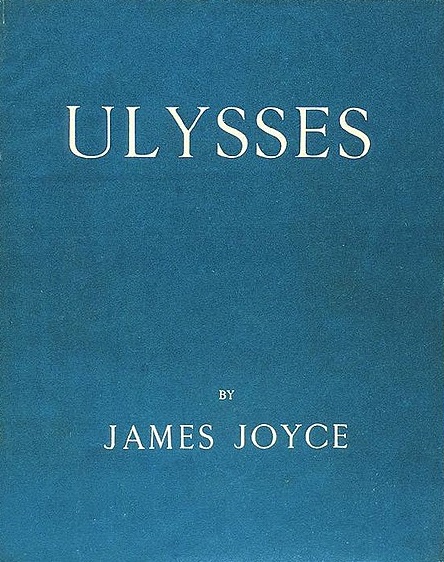
No mainstream publisher would risk the complete book. Sylvia Beach, an American who ran the Paris bookshop Shakespeare and Company, offered to publish it herself. The printer Maurice Darantière in Dijon set the text, and Joyce kept adding material on the proofs, greatly expanding some episodes. The first edition of 1,000 numbered copies appeared on 2 February 1922. It contained many printing errors, partly because the French typesetters did not read English.
Later in 1922 Weaver’s Egoist Press issued an edition printed from the same plates. Other editions followed, including one from the Odyssey Press in Hamburg in 1932 that was revised with the help of Joyce’s friend Stuart Gilbert.
Intermediate
Obscenity trials and censorship
Ulysses’s frankness about sex and the body caused trouble from the start. The United States Post Office confiscated and destroyed issues of The Little Review containing episodes of the novel. In 1920, after the magazine published part of “Nausicaa”, in which Bloom becomes aroused while watching Gerty MacDowell, the New York Society for the Suppression of Vice brought a complaint. In 1921 Anderson and Heap were convicted of publishing obscenity and fined, and serialization stopped.
After the book appeared, copies sent to the United States and Britain were seized and burned by postal and customs authorities, and it had to be smuggled in. Its reputation as a forbidden book spread among writers and students.
In 1932 the publisher Random House and the lawyer Morris Ernst deliberately arranged for a copy to be seized so they could challenge the ban in court. On 6 December 1933, in United States v. One Book Called Ulysses, Judge John M. Woolsey ruled that the book was not obscene: it must be judged as a whole and by its effect on an average reader, and he found its intent serious rather than pornographic. The decision was upheld on appeal in 1934, and Random House published the first authorized American edition that year.
In Britain the Bodley Head published the book in 1936, when prosecution was no longer considered likely. The Woolsey decision became an important precedent in the history of freedom of expression, influencing later American law on literature and obscenity.
Intermediate
Reception, influence and Bloomsday
Early reactions were sharply divided. T. S. Eliot wrote in 1923 that it was the most important expression the present age had found, and that Joyce’s use of myth was a method of giving shape to modern history. Ezra Pound praised it enthusiastically. Virginia Woolf, whose own Mrs Dalloway (1925) also follows a single day in a city, was ambivalent: she recognized its daring but in a 1923 essay called it a “memorable catastrophe”. The English novelist Arnold Bennett admired parts but complained of its tedium, and some reviewers condemned it as obscene or as literary anarchy.
Over the following decades Ulysses became a central text of modernism and a model for novelists in many languages. Writers such as William Faulkner, Samuel Beckett, who worked as Joyce’s assistant in Paris, and many later experimental novelists absorbed its techniques. It became a staple of university courses and one of the most studied novels in the world, with a large scholarly industry devoted to its allusions.
In 1954, on the fiftieth anniversary of the novel’s day, a group of Irish writers including Flann O’Brien and Patrick Kavanagh made a pilgrimage along parts of the book’s route. Since then 16 June has become Bloomsday, celebrated in Dublin and around the world with readings, performances, Edwardian costume and breakfasts of kidneys. The novel has also been adapted for stage, film and radio, including a complete dramatized reading on Irish radio in 1982.
Joyce’s last book, Finnegans Wake (1939), went even further into linguistic experiment. Ulysses stands between his earlier, more realist works and that radical final book.
Advanced
Textual problems and the editions war
The text of Ulysses is unusually unstable. Joyce wrote drafts in notebooks, made a fair copy (now the Rosenbach manuscript in Philadelphia), had typescripts made by different typists, and revised extensively on multiple sets of printer’s proofs. Errors entered at every stage, and his poor eyesight meant that he could not catch them all. Later editions corrected some mistakes and introduced others; the first American edition of 1934 was set from a pirated text.
In 1984 the German scholar Hans Walter Gabler published Ulysses: A Critical and Synoptic Edition, which reconstructed the text from manuscripts and proofs using computer-assisted methods and claimed to correct about 5,000 errors. At first it was hailed as definitive. In 1988 the American scholar John Kidd attacked it in The New York Review of Books as “the scandal of Ulysses”, arguing that it introduced new errors and relied on inconsistent editorial principles. Gabler and his supporters rejected many of these criticisms.
The controversy had practical consequences. Random House and the Bodley Head reverted to their older texts for some editions, and a planned edition by Kidd was never published. Today several texts are in use, and scholars often cite episode and line numbers from Gabler’s edition while consulting others. The debate raised general questions about what a “correct” text is when an author revised continually and the process of production was part of the work.
The discovery and availability of additional drafts, including notebooks acquired by the National Library of Ireland in the early 2000s, continues to feed “genetic criticism”, which studies how the book grew from note to proof.
Advanced
Critical debates
The Homeric method. Eliot saw the parallels with the Odyssey as a “mythical method” that gave order to modern chaos; Pound called them a scaffold. Stuart Gilbert’s James Joyce’s Ulysses (1930), written with Joyce’s cooperation, published a detailed schema assigning each episode an hour, an organ of the body, an art, a colour, a symbol and a technique. Later critics debated how seriously to take these schemas, and Joyce himself reportedly told Samuel Beckett that he might have “over-systematized” the book.
Humanism and form. One tradition, represented by Richard Ellmann’s great biography James Joyce (1959, revised 1982), reads Ulysses as a humane celebration of ordinary life, centred on Bloom’s decency. Others, influenced by structuralism and post-structuralism, emphasize its play with language and its refusal of a single authoritative style, reading the book as being about writing itself.
Molly and gender. Molly Bloom’s monologue has been read both as a celebration of female desire and as a male fantasy of woman as body and nature. Feminist critics have debated whether Joyce’s portrait challenges or reproduces stereotypes; the episode remains one of the most discussed in modern literature.
Ireland and empire. Since the 1980s, critics such as Declan Kiberd have read Ulysses in postcolonial terms, as a book about a colonized city and a critique of both British imperialism and exclusive nationalism. Kiberd’s Ulysses and Us (2009) also argues against the idea that the novel belongs only to specialists, presenting it as a book of practical wisdom for everyday life.
Key ideas
- The ordinary as epic
- An average man’s single day in a city is given the scale and seriousness of Homer’s epic.
- Homeric parallels
- Each episode loosely mirrors an episode of the Odyssey, often ironically.
- Stream of consciousness
- The flow of thoughts, feelings and memories is rendered directly, often without full sentences.
- Changing styles
- Each episode has its own technique, from newspaper headlines to a play script to a catechism.
- Dublin in detail
- The city of 1904 is recorded with exact streets, shops and people, grounding the experiment in reality.
- Outsider and exile
- Bloom, a Jewish Dubliner, and Stephen, an alienated artist, both stand apart from the dominant society.
- Censorship and freedom
- The book’s legal battles helped change how literature is judged under obscenity law.
Records
- 1882 — James Joyce is born in Rathgar, Dublin, on 2 February.
- 1904 — 16 June: the day on which the novel is set; Joyce leaves Ireland with Nora Barnacle in October.
- 1914 — Joyce begins writing Ulysses in Trieste; Dubliners is published.
- 1915 — Moves to Zurich during the First World War.
- 1918 — Serialization begins in The Little Review (March).
- 1920 — Joyce moves to Paris; publication of “Nausicaa” leads to an obscenity complaint.
- 1921 — The Little Review’s editors are convicted; serialization ends; Joyce finishes the book.
- 1922 — 2 February: Shakespeare and Company publishes the first edition in Paris.
- 1933 — Judge John M. Woolsey rules that Ulysses is not obscene (6 December).
- 1934 — The ruling is upheld on appeal; Random House publishes the first authorized US edition.
- 1936 — The Bodley Head publishes the first edition printed in Britain.
- 1941 — Joyce dies in Zurich on 13 January.
- 1954 — First organized Bloomsday pilgrimage in Dublin, on the 50th anniversary.
- 1984 — Hans Walter Gabler’s critical edition appears, soon followed by a fierce editorial controversy.
Glossary
- Modernism
- An early twentieth-century movement in the arts that broke with traditional forms to express modern experience.
- Stream of consciousness
- A narrative method that represents the continuous flow of a character’s thoughts and perceptions.
- Interior monologue
- A character’s unspoken thoughts presented directly, as if overheard.
- Parody
- An imitation of a style for comic or critical effect.
- Schema
- An outline Joyce gave friends listing each episode’s Homeric title, hour, organ, art, symbol and technique.
- Martello tower
- A small round coastal fort; the novel opens in one at Sandycove.
- Bloomsday
- 16 June, the day on which the novel is set, celebrated by readers every year.
- Obscenity law
- Laws banning publications judged indecent; Ulysses was tried under them in the United States.
- Critical edition
- An edition that reconstructs a text from manuscripts and early printings, recording variants.
- Catechism
- A question-and-answer format used in religious teaching, imitated in the “Ithaca” episode.
Questions and answers
Is Ulysses really about just one day?
Yes. It covers Thursday 16 June 1904, from about 8 a.m. until after 2 a.m. the next morning, but memories reach back across the characters’ whole lives.
Do I need to know the Odyssey to read it?
No, but knowing the outline helps you enjoy the jokes and parallels. The episode titles give clues.
Why was the book banned?
Authorities considered its frank descriptions of sex and bodily functions obscene. A US court ruled in 1933 that, judged as a whole, it was a serious work of art.
What is Bloomsday?
An annual celebration on 16 June when readers in Dublin and around the world reenact scenes, read aloud and follow Bloom’s route.
Why is it so hard to read?
It uses many styles, dense allusions, puns and unmarked shifts between narration and thought. Many readers use guides or read it with others.
Which text of Ulysses is correct?
There is no single agreed text. The 1922 edition has many errors, and Hans Walter Gabler’s 1984 corrected edition was itself strongly criticized. Several editions are used today.
Who was Sylvia Beach?
An American bookseller in Paris whose shop, Shakespeare and Company, published Ulysses when no other publisher would.
Sources and further reading
- Ulysses (novel). Wikipedia
- James Joyce. Wikipedia
- United States v. One Book Called Ulysses. Wikipedia
- The Little Review. Wikipedia
- Bloomsday. Wikipedia
- Stream of consciousness. Wikipedia
- James Joyce, Ulysses (full text). Project Gutenberg
- Richard Ellmann, James Joyce (new and revised edition). Oxford University Press, 1982
- Stuart Gilbert, James Joyce’s Ulysses: A Study. Faber and Faber, 1930
- Declan Kiberd, Ulysses and Us: The Art of Everyday Living. Faber and Faber, 2009
Related
- HomerThe poet tradition credits with the Iliad and the Odyssey, the founding epics of Greek literature. Whether one person composed both is debated.
- Virginia WoolfEnglish novelist and essayist whose experiments with narrative time and consciousness helped shape literary modernism.
- Franz KafkaPrague-born German-language writer whose stories portray uncertainty, opaque authority and people struggling to understand their circumstances.
- Tractatus Logico-PhilosophicusLudwig Wittgenstein’s compact philosophical book examines language, logic and what can be meaningfully said.
- William ShakespeareEnglish playwright and poet whose plays span comedy, history and tragedy.
- Divine ComedyItalian narrative poem by Dante Alighieri describing a journey through Hell, Purgatory and Paradise.
Written with AI assistance from the published sources listed above, and revised as new research appears.