Start at the top for an easy introduction. Go further down for more detail and scholarship.
- Easy
- Intermediate
- Advanced
For young readers
Imagine that another country took over your country, made the rules, and told you that you were not allowed to run your own home. That is what happened to Korea in 1910, when Japan made Korea its colony.
Nine years later, on 1 March 1919, a group of Korean leaders read a letter to the whole world called a Declaration of Independence. It said, very simply: Korea is a free country, and Koreans should govern themselves.
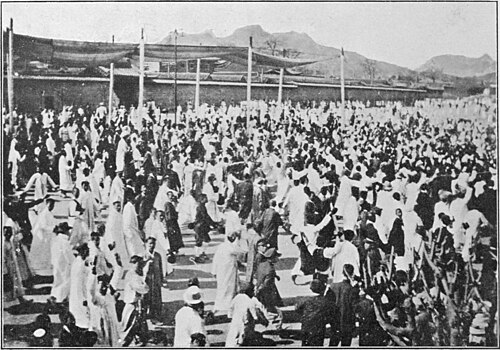
At the same time, in a park in Seoul, students read the same words aloud to a big crowd. People waved small Korean flags and shouted “Daehan dongnip manse!”, which means “Long live Korean independence!” Then they walked through the streets together.
The news spread from town to town by train, by hand-copied papers and by word of mouth. Farmers, students, shopkeepers, Buddhist monks, Christians, followers of a Korean religion called Cheondogyo, and many women and girls joined in. Most of them carried no weapons at all.
The Japanese government answered with soldiers and police. Many people were shot or hurt, and thousands were put in prison. Nobody knows exactly how many died: Korean records and Japanese records give very different numbers. Korea did not become free in 1919, but the brave marchers showed the world that Koreans wanted their own country, and today South Korea remembers them every year on 1 March.
At a glance
- Date
- Began 1 March 1919; most protests took place in March–April 1919, with scattered actions continuing into 1920–21
- Place
- All thirteen provinces of Korea under Japanese rule, starting in Seoul (Taehwagwan restaurant and Tapgol Park); also Korean communities in Manchuria, the Russian Far East, the United States and elsewhere
- Organizers
- 33 “national representatives” (15 Cheondoists, 16 Christians, 2 Buddhists) who signed the Declaration of Independence, together with student leaders
- Scale
- About 1,500–1,800 recorded demonstrations; estimates of participants range from under half a million to about 2 million, out of a population of roughly 16–17 million
- Deaths (disputed)
- Colonial government tally to end of April 1919: 553 protesters killed; Park Eun-sik (1920): 7,509; National Institute of Korean History database (2019): about 800–1,100 deaths documented in surviving records
- Arrests (disputed)
- About 26,700 recorded by the colonial authorities to end of April 1919; 46,948 according to Park Eun-sik
- Outcome
- No independence in 1919, but it led to the Korean Provisional Government (April 1919) and a change of colonial policy to so-called “cultural rule”
- Remembered as
- Samiljeol, a national holiday in South Korea since 1949; cited in the first sentence of the South Korean constitution
Easy
What was the March First Movement?
The March First Movement (Korean: Sam-il undong, “the Three-One Movement”) was a wave of protests against Japanese colonial rule that began in Korea on 1 March 1919. In the year of the movement Koreans also called it the Gimi independence movement, after the traditional name of the year 1919 in the sixty-year calendar cycle.
It started when leaders of Korea’s main religious communities signed and publicly proclaimed a Declaration of Independence in Seoul. Students and ordinary people then read the declaration aloud in public, waved Korean flags and shouted “Long live Korean independence!” From Seoul the protests spread to cities, market towns and villages across the whole peninsula and to Korean communities abroad.
The protesters mostly used peaceful methods: reading the declaration, marching, shouting slogans, closing shops and holding rallies on market days. The Japanese colonial government, called the Government-General of Korea (Chōsen Sōtokufu), responded with the army, military police (gendarmes) and ordinary police. They fired on crowds, burned homes and churches in some villages, and arrested tens of thousands of people.
The movement did not free Korea; Japanese rule lasted until 1945. But it was the largest popular protest in Korea under colonial rule, it led directly to the founding of the Korean Provisional Government in Shanghai, and it changed how Koreans, the Japanese government and the outside world thought about Korea.
Easy
Why did it happen?
Japan had taken control of Korea step by step after 1905 and formally annexed it in 1910. The first decade of colonial rule is usually called the period of “military rule” (budan seiji). The Governor-General was always an army or navy officer, military police kept order in the countryside, Korean newspapers and political organizations were banned, and even schoolteachers and officials wore uniforms and swords. A large land survey (1910–18) changed who legally owned land, and many Korean farmers ended up as tenants. Koreans faced legal and economic discrimination compared with Japanese settlers.
Events abroad gave Koreans new hope. At the end of the First World War, in January 1918, the American president Woodrow Wilson called for a peace settlement based on “self-determination”, the idea that peoples should choose their own government. Leaders of colonized peoples across Asia and Africa hoped that this idea would apply to them, too, and the Paris Peace Conference of 1919 seemed an opportunity to make their case. In practice, Wilson’s principle was applied mainly to territories of the defeated powers, and Japan was one of the victors.
Two events in early 1919 turned hope into action. On 21 January the former emperor Gojong died suddenly. Rumours spread that he had been poisoned by the Japanese; the cause of his death has never been proven, but the rumours angered many Koreans. On 8 February Korean students in Tokyo issued their own declaration of independence and were arrested. News of their action reached Korea and encouraged the leaders who were already planning a protest.
Gojong’s state funeral was set for 3 March, and people from all over the country were expected to come to Seoul. The organizers chose 1 March, two days earlier, to begin.
Easy
1 March 1919: the day it began
Planning had begun in late 1918 among leaders of Cheondogyo (the “Religion of the Heavenly Way”, a Korean religion that grew out of the nineteenth-century Donghak movement), led by Son Byong-hi. They were joined by Presbyterian and Methodist Christians and by Buddhists, including the monk and poet Han Yong-un. Thirty-three of them signed the Declaration of Independence as “national representatives”. The text was drafted by the writer Choe Nam-seon. Around 21,000 copies were printed secretly at Boseongsa, a printing house run by Cheondogyo, and distributed across the country on 28 February.
The declaration opens with the words (in a simple translation): “We hereby declare that our Korea is an independent state and that Koreans are a self-governing people.” It is written in a formal, heavily Sino-Korean style, and it stresses that Koreans do not seek revenge on Japan but want a relationship of equals. At its end are three “public pledges”, traditionally credited to Han Yong-un, that call on participants to act in an orderly way and without violence.
The plan had been to read the declaration in Tapgol (Pagoda) Park in central Seoul. Fearing that a large crowd might clash with the police, the representatives instead met on the afternoon of 1 March at a restaurant called Taehwagwan. Twenty-nine of them were present. They read the declaration, informed the authorities, and waited to be arrested; the police and gendarmes soon took them away.
Meanwhile several thousand students and citizens had gathered in Tapgol Park. A young man, often identified as the student Jeong Jae-yong, read the declaration aloud. The crowd shouted “Manse!” and poured into the streets, splitting into groups that marched past the palace gate of Deoksugung, where Gojong’s body lay, and through the city. On the same day protests also broke out in Pyongyang, Wonsan and several other northern towns that had received copies of the declaration by rail.
Intermediate
Who took part, and how the movement spread
Over the following weeks the protests spread along railway lines to provincial cities and then to the countryside. By the middle of March every province had seen demonstrations; the island of Jeju joined on 21 March. The movement peaked in late March and early April. In rural areas, protests were often timed to coincide with market days, when crowds gathered naturally, and people marched to the local police post or county office. Some towns held protests again and again for weeks.
The movement had no single central command after its first days. Local networks of churches, Cheondogyo parishes, schools and village elders organized their own actions. This made it hard to suppress, but also meant that its character differed from place to place. Participants included farmers, who formed the largest share of those arrested, as well as students, teachers, merchants, labourers, Confucian scholars, Buddhist monks, and kisaeng (professional female entertainers). Shopkeepers in Seoul and other cities closed their shops in protest.
Women and girls played a prominent role. Students from girls’ schools such as Ewha marched, distributed leaflets and were arrested; one of them, Yu Gwan-sun, became the best-known symbol of the movement. For many observers at the time, the public activism of women in a society where they had been largely excluded from politics was itself a striking change.
The protests were overwhelmingly nonviolent at first. As repression intensified, some crowds in rural areas threw stones, attacked police posts or burned government buildings, and a small number of Japanese police and soldiers were killed. Historians describe this shift as a response to shootings and arrests rather than the original plan, but Japanese officials used such incidents to portray the whole movement as riots.
Koreans abroad joined in. On 13 March a large rally was held in Longjing in Manchuria, where Chinese troops under pressure from Japan opened fire. Koreans in the Russian Far East, in Hawaii and on the American mainland held meetings; in April a “First Korean Congress” met in Philadelphia.
Intermediate
Suppression: shootings, massacres and prisons
The Government-General had not expected protests on this scale. It reinforced the gendarmerie and police, brought in more troops from Japan and deployed them across the country. Troops and police fired on unarmed crowds in many places, used swords and bayonets, and in some cases were assisted by armed Japanese civilians and fire brigades.
The most notorious atrocity took place on 15 April 1919 at Jeam-ri, a village in Suwon County (today part of Hwaseong, Gyeonggi Province). A Japanese army lieutenant gathered Christian and Cheondogyo men of the village in the church, had soldiers fire on them, and then set the building on fire. According to the Encyclopedia of Korean Culture, 23 people died in the church and 6 more were killed with swords in the nearby hamlet of Gojuri. Foreign missionaries, including the Canadian Frank Schofield, visited the site soon afterwards and photographed and reported what they saw, which helped make the massacre known abroad.
Jeam-ri was not unique. Villages such as Sucheon-ri were burned, and there were mass shootings in other districts. Those arrested were often beaten and tortured. Seodaemun Prison in Seoul became a symbol of this treatment. Yu Gwan-sun, a sixteen-year-old student, organized a protest at the Aunae market near Cheonan on 1 April 1919, where gendarmes opened fire and killed some 19 people, including both of her parents. She was sentenced to prison and died in Seodaemun Prison on 28 September 1920, aged 17.
Colonial courts punished tens of thousands. According to figures cited in the Encyclopedia of Korean Culture, about 18,000 people were held under colonial law by October 1919, and 9,289 were brought to trial: most under the 1907 Security Law, others for rioting, insurrection and other charges. Many received prison sentences and flogging, a punishment the colonial legal system applied to Koreans but not to Japanese. The signers of the declaration received sentences of up to three years.
Intermediate
How many people took part, and how many died?
No one knows exactly how many people took part in the movement, or how many were killed. The main figures come from three kinds of sources that were made for different purposes, cover different periods and count in different ways. Readers should treat every number as an estimate.
Korean nationalist figures. The historian and independence activist Park Eun-sik published The Bloody History of the Korean Independence Movement (Hanguk dongnip undong jihyeolsa) in Shanghai in 1920. His tables, which cover March to May 1919, count 1,542 gatherings with about 2.02 million participants, 7,509 killed, 15,961 wounded and 46,948 arrested. The Encyclopedia of Korean Culture notes that these figures were based on reports sent through the Provisional Government’s secret liaison network inside Korea and record the damage at the time of the protests; they have been repeated in many South Korean textbooks.
Japanese colonial figures. The Government-General compiled tables from police and gendarmerie reports. One tally for March 1 to the end of April 1919 recorded 553 Korean protesters killed, 1,409 wounded and 26,713 arrested, and, on the Japanese side, 8 or 9 police and soldiers killed and about 150–160 wounded, depending on the report. Japanese estimates of participation also vary: one police summary counted about 1,214 protests and roughly 1.1 million participants, while another sum of the official tables gives about 587,000 participants. These figures cover a shorter period and were compiled by the authority responsible for the violence, which had reasons to minimize casualties; at Jeam-ri, soldiers deliberately destroyed evidence.
Recent research. In 2019, for the centenary, the National Institute of Korean History (NIKH) published an online March First Movement Database built from 27,729 items of information in primary sources. As of 30 November 2019 it recorded 1,798 protests, 0.82–1.06 million participants and about 800–1,100 deaths. The database’s makers stress that these are minimum figures, including only events for which reliable evidence survives, and that the real numbers were certainly higher.
So the number of people killed lies somewhere between the colonial count of 553 and Park Eun-sik’s 7,509, and the documentary minimum is now around 800–1,100. Historians continue to debate where in that range the truth lies. Whatever the exact figures, every set of numbers shows a nationwide movement on a scale never seen before in colonial Korea, and a harsh military response against largely unarmed people.
Intermediate
Results: a government in exile and a new colonial policy
The movement did not win independence, and no major power supported Korea’s claim at Paris. But it had important consequences. Several provisional governments were proclaimed in spring 1919, and in April 1919 activists gathered in Shanghai founded the Provisional Government of the Republic of Korea. It chose a democratic republic as its form of government, rejecting a return to monarchy. The different provisional governments were unified in September 1919. South Korea today treats 11 April 1919 as the founding date of this government, and its constitution describes the Republic of Korea as upholding the tradition of the Provisional Government “born of the March First Independence Movement”.
In Korea itself, Japan changed its methods. Admiral Saitō Makoto became Governor-General in August 1919 and announced a policy of “cultural rule” (bunka seiji). The gendarme police system was replaced by an ordinary police force, the rule that officials and teachers wear swords was ended, flogging was abolished, and Korean-language newspapers such as the Dong-A Ilbo and Chosun Ilbo were permitted in 1920. The regulations were even changed to allow a civilian Governor-General, although none was ever appointed.
Many historians argue that these reforms were largely cosmetic or even strengthened control. The number of police increased sharply, censorship continued, and Japan built networks of pro-Japanese Koreans to divide the national movement. At the same time, the limited space for Korean publishing and associations allowed a wide range of cultural, educational, religious, socialist and nationalist movements to grow during the 1920s.
For the independence movement, 1919 was a turning point. After the failure of peaceful demonstration to achieve independence, activists divided over strategy: diplomacy, gradual “cultivation of national strength”, armed struggle from Manchuria, or socialist revolution. All of these later currents looked back to March First as their common origin.
Intermediate
The world’s response and influence abroad
Japan tried to control how the world saw the protests, describing them as riots stirred up by missionaries or Bolsheviks. Foreign missionaries, journalists and diplomats in Korea documented the violence, and Korean communities abroad publicized it. News reached Shanghai within days and American newspapers by mid-March. Frank Schofield, a Canadian veterinary scientist and missionary in Seoul, took photographs and wrote reports; he is honoured in South Korea as a friend of the independence movement.
Governments were less responsive than journalists. The United States, Britain and France all had reasons to keep good relations with Japan, one of the Allied victors, and none challenged Japan’s rule over Korea. Historian Erez Manela has placed the movement in a wider “Wilsonian moment” of 1919, when Koreans, Chinese, Indians and Egyptians all appealed to self-determination and found that the great powers would not apply it to them.
The movement also inspired others. Chinese intellectuals and newspapers, including Chen Duxiu, praised the Korean protesters, and some organizers of China’s May Fourth Movement, which began on 4 May 1919, cited Korea as an example. Links to protests in India, Egypt and the Philippines have also been suggested. Historians debate how direct these influences were: these movements had their own causes, and 1919 was a year of anticolonial protest across the world.
Intermediate
Memory: how Korea, North Korea and Japan remember it
During the colonial period, Koreans marked the anniversary quietly at home and openly abroad, in Shanghai, Manchuria, the Soviet Far East, Japan and the United States. After liberation in 1945, the day became a public holiday, and in 1949 the Republic of Korea designated 1 March as Samiljeol, a national holiday. Each year the declaration is read again, bells are rung and ceremonies are held at Tapgol Park and elsewhere. The movement is presented as a founding event of the modern Korean nation and the source of the Republic’s legitimacy.
In North Korea the event was at first also a national holiday, but its official interpretation changed. North Korean histories stress the role of the masses and of the family of Kim Il Sung, present Pyongyang as a centre of the movement, and criticize the 33 representatives as bourgeois leaders who gave themselves up to the police. The two Koreas therefore remember the same event in quite different ways.
In Japan at the time, officials called the movement a “disturbance” (sōjō), and most of the press supported the government’s view. A few Japanese voices, such as the political thinker Yoshino Sakuzō and the journalist Ishibashi Tanzan, criticized colonial policy, and the art critic Yanagi Sōetsu expressed sympathy for Koreans. In later decades Japanese school textbooks have treated the movement briefly. Individual Japanese politicians have visited Seodaemun Prison and expressed apologies, but the memory of colonial rule remains a sensitive issue between Japan and South Korea.
In South Korea too, memory has been contested. Historians have long debated how to judge the 33 representatives, several of whom, including the author of the declaration Choe Nam-seon, later collaborated with Japanese rule. Others emphasize the ordinary people, the women and the provincial activists whose names are recorded only in court files.
Advanced
Sources and the problem of numbers
The documentary base for March First is unusually large but deeply uneven. Japanese sources include Government-General and gendarmerie reports, police intelligence, court records of the trials, and army documents. They are detailed and often precise about places and dates, but they were produced by the repressing authority, used the category of “riot”, and tended to record Korean casualties incompletely. Court records, however, are an indispensable source for the names, ages, occupations and religions of participants, and much social history of the movement has been built on them.
Korean nationalist sources, above all Park Eun-sik’s 1920 history and materials compiled by the Provisional Government, were produced in exile to publicize Japanese violence and to support diplomatic appeals. Their figures depended on secret reports from inside Korea that could not be checked systematically. They were never intended as neutral statistics, and their totals are much higher than any figure that can now be documented case by case, but they also include deaths, injuries and arrests that never reached Japanese records.
A third body of evidence comes from foreign observers: missionary letters and reports, consular dispatches, and press accounts. These are valuable because their authors were outside both the colonial state and the independence movement, but they covered only the places foreigners could reach, and many writers had their own religious or political perspectives.
The NIKH database of 2019 represents a methodological shift: rather than adopting one side’s totals, it links each claimed event to documentary evidence and maps it geographically. Its lower bound of about 800–1,100 deaths is therefore a floor, not an estimate of the true total. The gap between that floor and Park’s 7,509 reflects both possible overcounting in wartime propaganda and the many deaths that left no record. Honest presentation of March First therefore requires showing all three sets of numbers and explaining how each was made.
Advanced
Historiographical debates
Leadership versus the people. An older narrative centred on the 33 representatives. Later scholarship, including Marxist and “people’s history” (minjung) approaches in South Korea and official North Korean historiography, has emphasized that the representatives surrendered on the first day and that the movement was sustained by students, peasants and local organizers. Recent social historians use trial records and the NIKH database to reconstruct these local networks, while also recognizing that the religious organizations provided the initial coordination.
Nonviolence and violence. The movement is often described as nonviolent, and the declaration and its pledges called for order. Detailed studies show that many rural protests, especially in April, involved attacks on police posts and offices after troops had opened fire. Scholars debate whether this should be seen as a radicalization of the movement, as legitimate self-defence, or simply as the variety of a decentralized popular uprising.
Was it a revolution? Some historians, such as Baik Young-seo, have argued that March First should be understood as a revolution, not only a protest, because it rejected monarchy, produced a republican government and reshaped Korean political thought. Others prefer to call it an independence movement or uprising, pointing out that it did not change who held power in Korea.
International context. Scholars disagree about how much Wilsonian self-determination mattered. Erez Manela and others stress the global moment of 1919; Korean historians have also highlighted domestic causes, including the burdens of the first decade of colonial rule, the Tokyo students’ declaration, and a declaration issued by Korean exiles in Manchuria and the Russian Far East (the Muo Declaration, whose exact date is itself debated). The death of Gojong is widely seen as having shaped the timing, but whether he was poisoned remains unproven.
Key ideas
- Self-determination
- The idea that a people should choose its own government; Wilson’s use of it in 1918 encouraged Koreans and other colonized peoples.
- Nonviolent mass protest
- Reading the declaration, marching, shouting “manse” and closing shops, rather than armed rebellion, were the movement’s main methods.
- Cross-religious alliance
- Cheondoists, Christians and Buddhists, groups that often competed, cooperated to launch the movement.
- Colonial violence
- The colonial state answered with shootings, massacres such as Jeam-ri, torture and mass trials.
- Contested numbers
- Korean, Japanese and modern database figures for deaths differ by more than ten times; each reflects who counted and why.
- Cultural rule
- Japan’s post-1919 policy that relaxed some controls while expanding policing and trying to divide Korean society.
- Provisional Government
- The republican government-in-exile founded in April 1919, which South Korea regards as its predecessor.
Records
- 1910 — Japan formally annexes Korea; the period of “military rule” begins.
- 1918 — In January, Woodrow Wilson’s Fourteen Points raise hopes for national self-determination; the First World War ends in November.
- 1919 — 21 January: former emperor Gojong dies suddenly; rumours of poisoning spread.
- 1919 — 8 February: Korean students in Tokyo issue a declaration of independence.
- 1919 — 1 March: the Declaration of Independence is read at Taehwagwan and Tapgol Park; protests begin in Seoul and northern cities.
- 1919 — Late March–April: protests peak across all provinces; 1 April: shootings at the Aunae market; 15 April: Jeam-ri massacre.
- 1919 — April: the Provisional Government of the Republic of Korea is founded in Shanghai (South Korea marks 11 April).
- 1919 — 4 May: the May Fourth Movement begins in China; August: Saitō Makoto becomes Governor-General and announces “cultural rule”.
- 1920 — Park Eun-sik publishes his history with casualty statistics in Shanghai; Yu Gwan-sun dies in Seodaemun Prison (28 September).
- 1945 — Japanese colonial rule ends with Japan’s defeat in the Second World War.
- 1949 — South Korea designates 1 March as the national holiday Samiljeol.
- 2019 — Centenary; the National Institute of Korean History publishes its March First Movement Database.
Glossary
- Manse (만세)
- “Ten thousand years”, a cheer meaning “long live”; protesters shouted “Daehan dongnip manse”, “Long live Korean independence”.
- Government-General
- The Japanese colonial government of Korea (1910–45), headed by a Governor-General appointed from Tokyo.
- Gendarmerie (military police)
- Army police who controlled much of rural Korea during the 1910s.
- Cheondogyo
- “Religion of the Heavenly Way”, a Korean religion descended from the Donghak movement; its leaders initiated the March First plan.
- National representatives (33)
- The religious leaders who signed the 1919 Declaration of Independence.
- Samiljeol
- “Three-One Day”, the South Korean national holiday on 1 March.
- Cultural rule
- The name for Japan’s colonial policy after 1919, which allowed limited Korean publishing while tightening police control.
- Provisional Government
- The Korean government-in-exile founded in Shanghai in 1919.
- Security Law (1907)
- A law used by colonial courts to punish thousands of participants in the movement.
- Self-determination
- The principle that nations have the right to decide their own political status.
Questions and answers
Why is it called “March First”?
Because it began on 1 March 1919. In Korean it is Sam-il (three-one) undong, the “Three-One Movement”.
Did Korea become independent because of the movement?
No. Japanese rule continued until 1945. But the movement led to the Provisional Government and remained a source of inspiration for the independence struggle.
Were the protesters armed?
Almost all the early protests were unarmed. Later, some crowds in rural areas attacked police posts or offices, usually after troops had fired on them.
How many people were killed?
It is uncertain. The colonial government counted 553 protesters killed by the end of April 1919; Park Eun-sik’s 1920 history gives 7,509; a 2019 South Korean government database documents about 800–1,100 deaths as a minimum.
Who was Yu Gwan-sun?
A sixteen-year-old student who organized a protest near Cheonan, lost both parents when gendarmes opened fire, and died in Seodaemun Prison in 1920. She is remembered as a symbol of the movement.
Why do the Japanese and Korean numbers differ so much?
They cover different periods, used different reporting systems, and were compiled by opposite sides: the colonial authorities had reasons to minimize, and the exile movement to publicize, the violence.
How is the movement interpreted differently in North and South Korea?
South Korea treats it as the origin of the Provisional Government and the Republic; North Korea stresses the masses and the Kim family and criticizes the 33 representatives.
What was the link with China’s May Fourth Movement?
Chinese intellectuals praised the Korean protests, and some May Fourth organizers cited them as inspiration, though the Chinese movement had its own causes.
Sources and further reading
- 김진봉 (Kim Jin-bong), 3·1운동 (March First Movement). Encyclopedia of Korean Culture, Academy of Korean Studies
- 삼일운동 데이터베이스 소개 (March First Movement Database: introduction). National Institute of Korean History (국사편찬위원회), 2019
- March 1st Movement. Wikipedia
- 3·1 운동. Korean Wikipedia
- Korean Declaration of Independence. Wikipedia
- Jeamni massacre. Wikipedia
- Yu Gwan-sun. Wikipedia
- Korean Provisional Government. Wikipedia
- 朴殷植 (Park Eun-sik), 韓國獨立運動之血史 (The Bloody History of the Korean Independence Movement), 1920
- Erez Manela, The Wilsonian Moment: Self-Determination and the International Origins of Anticolonial Nationalism. Oxford University Press, 2007
Related
- Lu XunChinese writer and critic whose fiction and essays examined social hierarchy, custom and the pressures of modern change.
- October RevolutionBolshevik forces overthrew Russia’s Provisional Government in Petrograd in October 1917, opening a new phase of revolution and civil conflict.
- Assassination of Archduke Franz FerdinandThe killing of Archduke Franz Ferdinand and his wife Sophie in Sarajevo on 28 June 1914 triggered a diplomatic crisis that led to the First World War.
- Meiji RestorationThe political transfer of authority to the Meiji emperor in 1868 began a far-reaching transformation of Japan’s government and society.
- United Nations Conference on International OrganizationDelegates met in San Francisco in 1945 to draft and sign the United Nations Charter after the devastation of the Second World War.
Written with AI assistance from the published sources listed above, and revised as new research appears.