Course · 14 stops
East Asia and the World, 400–700: Kingdoms, Faiths and Laws
Between about 400 and 700, the Korean kingdoms, Japan and China built states that borrowed from one another — Buddhism, writing, law codes and ways of choosing officials travelled along the same sea lanes as envoys and craftsmen. At the same time, far to the west, the Byzantine and Sasanian empires rewrote their laws and fought for Mesopotamia, and the Maya city of Tikal reached its height.
This course follows fourteen places, people and events in roughly chronological order. Each stop says how it connects to the one before or after it, so you can see the same three centuries from several sides. Open any stop to read the full article, or jump to that year on the map.
- 1
391–412 CE
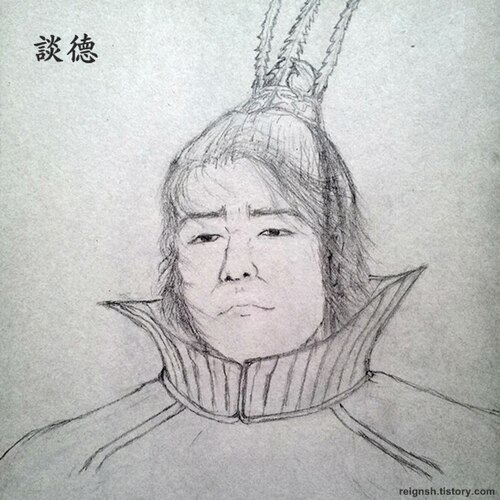
Gwanggaeto the Great
Goguryeo's king Gwanggaeto (r. 391–412) pushed his kingdom's borders across Manchuria and the northern Korean peninsula. The stele his son raised in 414 is the oldest long Korean historical inscription — and one of its lines about Wa (Japan) is still read differently by Korean and Japanese historians.
- 2
c. 400 BCE – 899 CE · Petén, northern Guatemala (Kingdom of Mutal)
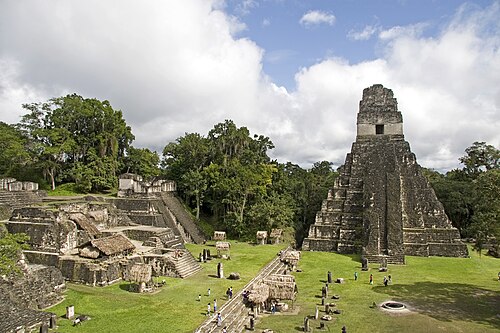
Tikal
In the same decades, on the other side of the Pacific, the Maya city of Tikal was transformed by contact with distant Teotihuacan in central Mexico (inscriptions date an arrival of Teotihuacan-linked lords to 378). Like the East Asian kingdoms, Tikal's rulers used inscriptions and monuments to tell their own version of history.
- 3
525–529 CE · Ungjin, modern Gongju (Baekje)
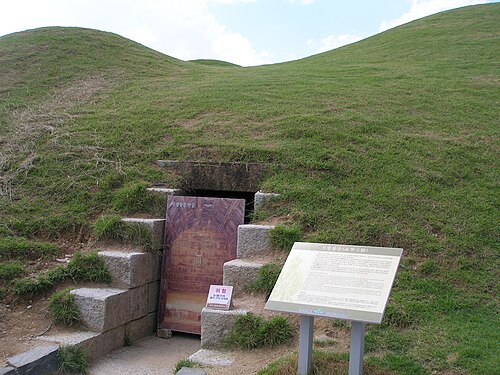
Tomb of King Muryeong
Back in Korea, the tomb of Baekje's King Muryeong (d. 523), found intact in 1971, shows how far a Korean kingdom's ties reached: a brick vault built in the style of southern China's Liang dynasty, a coffin of Japanese umbrella pine, and an epitaph stone that names the king and dates his burial.
- 4
c. 527 CE · Gyeongju (Silla)
Ichadon
Buddhism was spreading through the peninsula, but Silla's nobles resisted it. The story of the official Ichadon, executed in 527 and remembered as Silla's first Buddhist martyr, marks the moment the court accepted the new faith — a story preserved in later chronicles written centuries afterwards.
- 5
529–534 CE · Constantinople (Eastern Roman Empire)
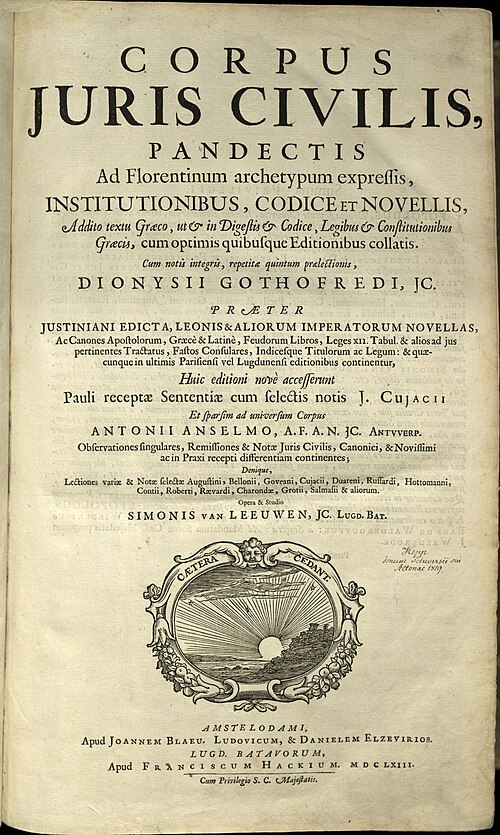
Corpus Juris Civilis (Justinian’s Code)
In exactly the same years (529–534), the Byzantine emperor Justinian had a thousand years of Roman law gathered into one body of books. East Asian kings were adopting written law codes too; comparing them shows two very different traditions solving the same problem of governing large states.
- 6
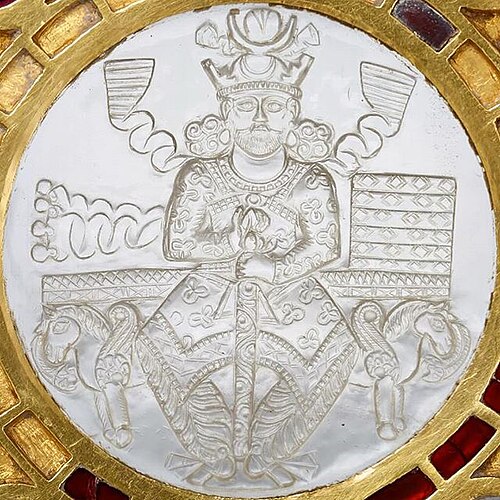
531–579 CE · Ctesiphon (Sasanian Empire)
Khosrow I Anushirvan
Justinian's great rival was the Sasanian king Khosrow I (r. 531–579) of Persia, who reformed taxes and the army, welcomed scholars from abroad and fought Byzantium over Syria and Mesopotamia. The two empires' long war would leave both exhausted just before the rise of Islam.
- 7
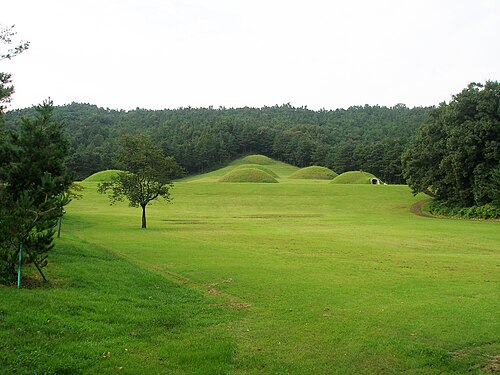
523–554 CE · Sabi, modern Buyeo (Baekje)
King Seong of Baekje
Muryeong's son, King Seong of Baekje (r. 523–554), moved his capital to Sabi in 538 and sent Buddhist images and scriptures to Japan — the traditional starting point of Japanese Buddhism, dated 538 or 552 depending on the source. He died in 554 fighting Silla, the neighbour whose rise ended the old alliance between them.
- 8
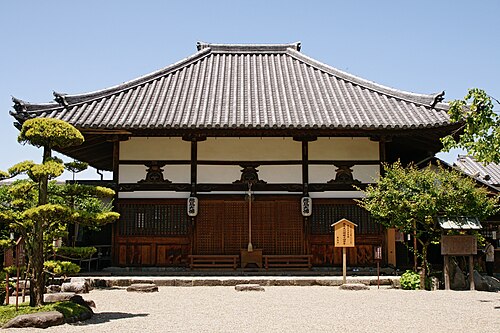
588–596 CE · Asuka (Yamato, Japan)
Asuka-dera
Baekje's gift bore fruit in Asuka-dera, Japan's first full-scale Buddhist temple (founded 588), built with the help of Baekje monks, carpenters, roof-tile makers and painters. The temple shows the new faith arriving in Japan together with a whole package of skills.
- 9
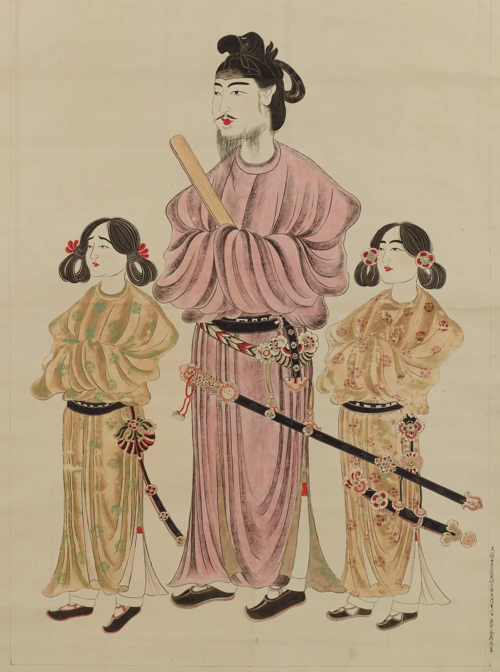
594–622 CE
Prince Shōtoku
At the Yamato court, Prince Shōtoku (574–622) is credited with the Seventeen-Article Constitution of 604 and with sending envoys to Sui China — although how much he personally did is debated, because the main account was written a century later.
- 10
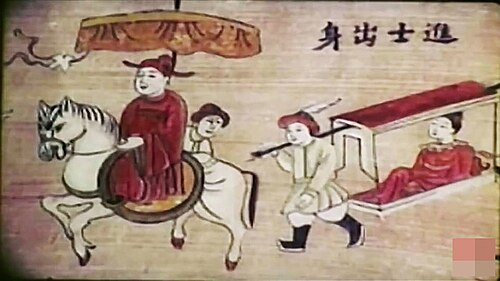
605–618 CE · Luoyang (Sui dynasty)
Imperial examination
The Sui dynasty, which reunified China in 589, began choosing officials through written examinations in the early 600s. The system grew under Tang and later dynasties and was copied in Korea from the tenth century and in Vietnam — one of East Asia's most lasting shared institutions.
- 11
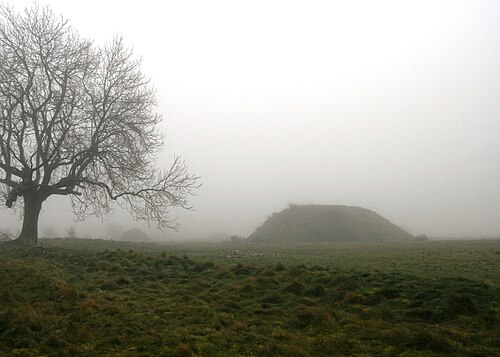
c. 610–635 CE · Near Woodbridge, Suffolk (Kingdom of East Anglia)
Sutton Hoo
Around the 620s, at the far western edge of Eurasia, an Anglo-Saxon king in East Anglia was buried in a 27-metre ship at Sutton Hoo with a helmet, gold jewellery, Byzantine silver and coins from Frankish Gaul — a reminder that long-distance exchange was not only an Asian story.
- 12
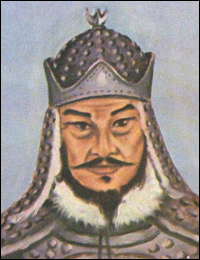
c. 642–665 CE · Pyongyang (Goguryeo)
Yeon Gaesomun
Back in the east, the Goguryeo general Yeon Gaesomun seized power in 642 and led resistance against Tang China's great invasion of 645. Chinese histories portray him as a tyrant, while modern Korean accounts often celebrate him as a defender — a good example of how one person can be judged very differently.
- 13
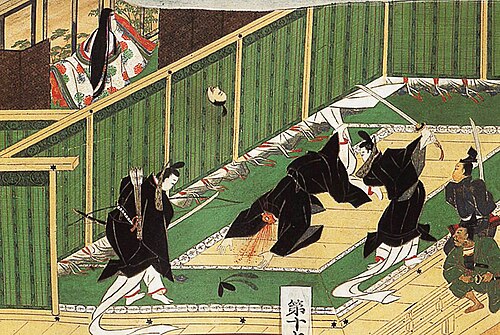
645–646 CE · Naniwa, Settsu (Yamato, Japan)
Taika Reform
In the very same year, 645, a coup at the Yamato court launched the Taika Reform, which set out to rebuild Japan on the model of Tang China — land held by the state, registers of households, and a centralised government. Scholars still debate how much of the reform happened at once and how much was written back into the record later.
- 14
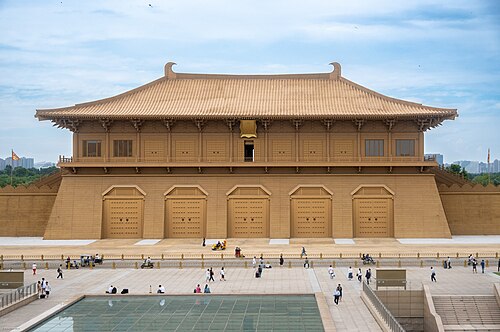
634–904 CE · Chang’an, modern Xi’an (Tang dynasty)
Daming Palace
All these threads led to Chang'an, the Tang capital, where the Daming Palace (begun 634) received envoys from Silla, Japan and many other lands. Standing in its halls, a visitor could meet the whole world this course has travelled through.
This course was written with the help of AI from the sources listed in each article.