Start at the top for an easy introduction. Go further down for more detail and scholarship.
- Easy
- Intermediate
- Advanced
For young readers
The Tale of Kiều is the most famous poem in Vietnam. It is a story told in verse, more than three thousand lines long, and many Vietnamese people can still recite parts of it by heart, the way some people know songs.
The heroine is Thúy Kiều, a girl who is beautiful, clever, and good at music and poetry. She falls in love with a young scholar named Kim Trọng and they promise to marry. But then bad men trick her family, and her father and brother are thrown into prison.
To save them, Kiều makes a painful choice: she lets herself be "sold" in marriage to a stranger to pay for their freedom. The stranger turns out to be a liar, and for fifteen years Kiều is pushed from one hard place to another. She is sad and often frightened, but she stays kind and never forgets the people she loves.
At the end, a wise Buddhist nun rescues her, and she meets her family and Kim Trọng again. The poem asks a big question that children and grown-ups both wonder about: why do bad things sometimes happen to good and talented people?
The poet, Nguyễn Du, wrote it in his own everyday language, Vietnamese, using a special old writing system called chữ Nôm, and in a sing-song rhythm of six words and then eight words. That is one reason ordinary people loved it and passed it on.
At a glance
- Author
- Nguyễn Du (阮攸, 1766–1820), poet and scholar-official
- Written
- Late 18th or early 19th century; the exact date is debated (proposals range from before 1802 to after 1814)
- Language and script
- Vietnamese, written in chữ Nôm (vernacular characters based on Chinese characters)
- Form
- Verse narrative (truyện) of 3,254 lines in lục bát ("six–eight") metre
- Source story
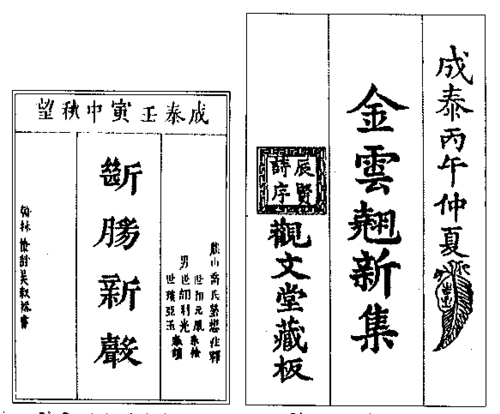
- The late-Ming/early-Qing Chinese novel Jin Yun Qiao (金雲翹, Kim Vân Kiều) by the pseudonymous Qingxin Cairen
- Setting
- Ming China, during the reign of the Jiajing Emperor (1521–1567)
- Status
- Widely regarded as the masterpiece of Vietnamese literature; translated into many languages
Easy
What is The Tale of Kiều?
The Tale of Kiều is a long narrative poem written in Vietnamese by Nguyễn Du. Its original title is Đoạn trường tân thanh (斷腸新聲), which means something like "A New Cry from a Broken Heart". Most people simply call it Truyện Kiều, "the Tale of Kiều", or just Kiều.
The poem has 3,254 lines. That is long enough to fill a small book, but it is not written in prose like a novel. Every line follows a musical pattern of syllables, tones and rhymes, so the whole story can be chanted or sung. Vietnamese scholars call this kind of work a truyện, a "tale in verse".
Nguyễn Du did not invent the plot from nothing. He took a Chinese novel called Jin Yun Qiao (in Vietnamese, Kim Vân Kiều) and retold it in Vietnamese poetry. But he changed its tone, feelings and language so much that the Vietnamese poem became far more famous than its model. Today it is often called the greatest work of Vietnamese literature, and Nguyễn Du is honoured as the nation's "great poet".
Easy
The story
The story takes place in China during the Ming dynasty. Vương Thúy Kiều is the elder daughter of a modest family. She has a younger sister, Thúy Vân, and a younger brother, Vương Quan. On a spring festival for visiting family graves, Kiều weeps at the forgotten tomb of Đạm Tiên, a talented singer who died young and unhappy. It is a hint that Kiều may share her fate. That same day she meets Kim Trọng, a young scholar, and the two secretly promise to marry.
Kim Trọng has to leave to attend a family funeral. While he is away, a silk merchant falsely accuses Kiều's family, officials seize their property, and her father and brother are arrested. Kiều decides that her duty to her parents must come first. She agrees to be married to a man who calls himself the student Mã in exchange for money to free them, and she asks her sister Vân to marry Kim Trọng in her place.
Mã turns out to be a trafficker who works for a brothel owner, Madam Tú. Kiều tries to kill herself rather than obey, is deceived again by a con man, and is finally forced into prostitution. A wealthy young man, Thúc Sinh, buys her freedom and makes her his secondary wife, but his jealous first wife, Hoạn Thư, has Kiều kidnapped and humiliated as a servant. Kiều escapes to a Buddhist temple, is betrayed once more, and ends up in another brothel.
There she meets Từ Hải, a bold rebel leader who wins a small kingdom for himself. He marries her, and with his power Kiều repays those who helped her and punishes those who harmed her, though she forgives Hoạn Thư. Then an imperial general, Hồ Tôn Hiến, persuades Kiều to convince Từ Hải to surrender. It is a trap: Từ Hải is killed, and Kiều, filled with guilt, throws herself into the Qiantang River.
She is saved by the nun Giác Duyên, who had been told of Kiều's destiny. Meanwhile Kim Trọng, now married to Vân and an official, has never stopped searching. After fifteen years the family is reunited. Kiều agrees to live with Kim Trọng, but as a companion and friend rather than as a wife in the full sense, and the poem closes with the narrator's reflections on talent and fate.
Easy
Why do so many people love it?
One reason is the language. For centuries, serious writing in Vietnam was done in Literary Chinese, a language most farmers could not read. Nguyễn Du wrote in Vietnamese, the language people spoke at home, and he chose plain, vivid words wherever he could. Many of his phrases became everyday sayings.
Another reason is sound. The poem's six-eight rhythm is the same rhythm used in Vietnamese folk songs and lullabies, so it is easy to remember. Even in the nineteenth century, when few people could read, villagers learned long passages by listening to someone read or chant them aloud.
A third reason is the heroine herself. Kiều makes a sacrifice for her family, suffers terribly through no fault of her own, and still keeps her dignity and her kindness. Many readers have seen in her the suffering of ordinary people, especially women, in a harsh world, and have also seen their country's own difficult history.
Intermediate
Form and craft: lục bát verse and the Nôm script
Lục bát means "six–eight". Lines alternate between six and eight syllables. The last syllable of each six-syllable line rhymes with the sixth syllable of the following eight-syllable line, and the last syllable of that eight-syllable line sets the rhyme for the next six. Rules about level and oblique tones on particular syllables give the verse its rising and falling music. The form comes from folk songs (ca dao), but by Nguyễn Du's time poets had already used it for long narratives.
The poem opens with two lines that almost every Vietnamese person knows: Trăm năm trong cõi người ta, / Chữ tài chữ mệnh khéo là ghét nhau. Roughly: "Within a hundred years, the span of human life, / talent and destiny are skilled at hating one another." In just fourteen syllables the poet announces the central theme.
Nguyễn Du wrote in chữ Nôm, a script that adapted Chinese characters to write Vietnamese words, sometimes borrowing a character for its sound and sometimes combining two characters, one for meaning and one for sound. Nôm was never an official script and was not standardised; the same word could be written in different ways, which later made copying and editing the text difficult.
His style blends two worlds. He uses allusions to Chinese classics and Sino-Vietnamese vocabulary, which educated readers enjoyed, but he prefers native Vietnamese words for emotion and landscape. Scholars praise his descriptions of nature that mirror a character's mood, his tight dialogue and his narrator's occasional comments, which invite readers to judge the injustice they are watching.
Intermediate
Themes: talent and fate, duty, karma and justice
The poem's key idea is the tension between tài (才, talent) and mệnh (命, fate or destiny). Heaven seems to envy people with great gifts. In Vietnamese the word tài rhymes with tai (災, disaster), and the poem's epilogue plays on this, warning that talent and calamity go together.
Filial piety, the Confucian duty of children to parents, drives the plot. Kiều's decision to sell herself is presented as an act of virtue, even though it destroys her own hopes. Readers have long debated how to weigh her loyalty to her family against her broken promise to Kim Trọng, and whether her later suffering is a punishment or a test.
Buddhist ideas run through the story. Kiều's misfortunes are explained as the working out of past karma, and her rescue comes through a nun. The poem ends by suggesting that a good heart matters more than talent. At the same time, Nguyễn Du shows vividly how human wickedness causes suffering: corrupt officials who take bribes, traffickers, jealous spouses and deceitful generals.
Compared with the Chinese novel, Nguyễn Du made the rebel Từ Hải into a heroic figure who defies the imperial order, and he gave the female characters, including the jealous Hoạn Thư, greater psychological depth. These changes are one reason modern readers have called him a humanist, and some a feminist, though these are modern labels applied to an eighteenth-century writer.
Intermediate
How the text was copied, printed and translated
No manuscript in Nguyễn Du's own hand survives. The poem spread through handwritten copies and woodblock-printed editions, and copyists sometimes "corrected" words, so the surviving versions differ in many small details. The oldest surviving printed editions date from the reign of Emperor Tự Đức in the second half of the nineteenth century; sources give dates in the 1860s and 1870s for the earliest of them.
An important step came in 1875, when the scholar Trương Vĩnh Ký published a transcription in quốc ngữ, the Latin-based Vietnamese alphabet, in Saigon. French translations followed, including Abel des Michels's edition in the 1880s. In 1902 an annotated woodblock edition by Kiều Oánh Mậu appeared under the title Đoạn trường tân thanh.
In the twentieth century, as quốc ngữ replaced Nôm, editors such as Đào Duy Anh produced annotated modern editions, and scholars compared variant texts to reconstruct the most reliable reading. Because the poem contains archaic words and many classical allusions, modern Vietnamese readers usually rely on notes.
The poem has been translated into many languages, including Chinese, French, English, Japanese and Korean. English versions include Huỳnh Sanh Thông's annotated verse translation (1983), Michael Counsell's (1994), Vladislav Zhukov's (2004) and Timothy Allen's The Song of Kieu (2019).
Intermediate
A poem that lives in everyday life
Soon after Nguyễn Du's death, readers were already praising the poem. A contemporary noted that not only scholars but also peasants passed it around orally. A popular saying of the late nineteenth century listed reciting the Nôm verses of Thúy Kiều among the refined pleasures of a gentleman.
Kiều entered folk culture in many forms. People practised bói Kiều, opening the book at random to tell fortunes; lẩy Kiều, quoting or rearranging lines to fit a new situation; and vịnh Kiều, writing poems about its characters. Names of characters became types: a Hoạn Thư is a jealous wife, a Sở Khanh a smooth-talking deceiver, a Tú Bà a brothel keeper.
In the twentieth century the poem became a symbol in debates about Vietnamese identity. In 1924, under French rule, the critic Phạm Quỳnh declared that if The Tale of Kiều survived, the language would survive, and if the language survived, the country would survive. Nationalist scholars such as Ngô Đức Kế and Huỳnh Thúc Kháng objected that a story about a courtesan was the wrong national model while the country was colonised.
In North Vietnam after 1954 the poem was at first suspected of being feudal, but Marxist critics came to read it as a protest against an unjust society. Today it is taught in schools across Vietnam. It has been adapted into traditional theatre (chèo and cải lương), music, painting and film, including Kim Vân Kiều (1924), one of the first films made in Vietnam.
Advanced
When was Kiều written? The dating debate
The date of composition is one of the central problems of Kiều studies. A long-standing view places it after Nguyễn Du's embassy to China in 1813–1814, when he might have encountered Jin Yun Qiao. This rests on the official biography in the Đại Nam chính biên liệt truyện, which says that after he returned from the Qing mission his northern poems and the Thúy Kiều tale circulated.
In 1943 the historian Đào Duy Anh pointed to a text by Nguyễn Văn Thắng, a contemporary, who referred to the author as the "mandarin of the Eastern Library" (Đông Các), a title Nguyễn Du held roughly from 1805 to 1809. Đào Duy Anh argued that the poem was already known while Du held that post, so it must predate about 1809.
The linguist Nguyễn Tài Cẩn argued for an even earlier date. A revision of the Nôm poem Hoa tiên by Nguyễn Du's nephew Nguyễn Thiện imitates Kiều's wording; Nguyễn Tài Cẩn found that the revision observes the naming taboos of the Lê–Trịnh regime rather than those of the Nguyễn dynasty, which would place it, and therefore Kiều, before 1802. The historian Hoàng Xuân Hãn also cited a commentary attributed to Nguyễn Lượng, who died in 1807. Critics, notably Nguyễn Quảng Tuân, have questioned the attribution of that commentary, which first appears in print in 1902.
Scholarly opinion now tends to favour composition before the China mission, perhaps in the last years of the Lê or under the Tây Sơn, but the question is not settled. The date matters for interpretation: a poem written before 1802 cannot easily be read as Nguyễn Du's commentary on serving the Nguyễn dynasty.
Advanced
Interpretive debates: allegory, adaptation and gender
One influential reading, found in Dương Quảng Hàm's literary history of the 1940s, treats Kiều as an allegory of its author. Just as Kiều remains loyal in her heart to Kim Trọng while forced to serve other men, Nguyễn Du, a former subject of the Lê, served the Nguyễn while longing for the old dynasty (tâm trạng hoài Lê). The reading is attractive but depends on the uncertain dating and on identifying the poet's private feelings, which the sources do not reveal directly.
A second debate concerns originality. Early comparative studies, including Đào Duy Anh's, stressed that Nguyễn Du kept the Chinese plot almost unchanged but reorganised it more tightly. Later scholars have argued that judging the Chinese novel as "redundant" ignores differences between prose fiction and verse, and that Nguyễn Du's achievement lies in voice, emotion and selective emphasis. The case is a classic example of creative adaptation across East Asian literatures that shared a written language but not a spoken one.
A third area is gender and sexuality. The poem is often described as the earliest extended depiction of sex work in Vietnamese literature, portraying it as a form of performance and emotional labour modelled on Chinese courtesan culture. Feminist readings emphasise Kiều's agency and the solidarity Nguyễn Du grants to women; others note that the poem still measures her worth by chastity and filial duty, and that its closing lesson counsels acceptance rather than resistance.
Finally, scholars disagree about genre. Kiều is sometimes called an "epic" in English, but Vietnamese critics usually classify it as a truyện thơ Nôm (Nôm verse narrative), alongside works such as Hoa tiên and Lục Vân Tiên. Calling it an epic reflects the allegorical and national readings of the twentieth century more than the work's own form.
Key ideas
- Tài and mệnh (talent and fate)
- The poem's central theme: Heaven seems to punish people of great talent, and the poet asks whether fate or human virtue has the final word.
- Filial piety (hiếu)
- The Confucian duty of children to parents, which leads Kiều to sacrifice her love and freedom to save her father and brother.
- Karma and compassion
- Buddhist ideas explain Kiều's suffering as the result of past deeds, while the nun Giác Duyên shows the power of compassion to rescue her.
- Social critique
- Through corrupt officials, traffickers and deceitful generals, the poem shows how injustice and bribery destroy innocent lives.
- Vernacular literature
- By writing in Vietnamese Nôm rather than Literary Chinese, Nguyễn Du helped prove that the native language could carry great literature.
- Creative adaptation
- Kiều retells a Chinese novel but transforms its tone, characters and emotional depth, making a new work.
- National symbol
- In the twentieth century the poem became a focus of debates about Vietnamese language, identity and resistance to colonial rule.
Records
- 1766 — Nguyễn Du is born in Thăng Long (Hanoi) into a family of scholar-officials.
- 1771 — The Tây Sơn rebellion begins in the south.
- 1789 — The last Lê emperor flees to Qing China; Nguyễn Du begins years of hardship and wandering.
- 1802 — Nguyễn Ánh founds the Nguyễn dynasty as Emperor Gia Long; Nguyễn Du enters his service. Some scholars date Kiều before this year.
- c. 1809 — Nguyễn Du leaves the post of Grand Secretary of the Eastern Library; Đào Duy Anh argued Kiều was known by this time.
- 1813 — Nguyễn Du leads an embassy to the Qing court (returning 1814); the traditional view dates Kiều after this trip.
- 1820 — Nguyễn Du dies in Huế; a foreword to an edition of Kiều is written the same year.
- 1875 — Trương Vĩnh Ký publishes a transcription of Kiều in the Latin-based quốc ngữ alphabet in Saigon.
- 1902 — Kiều Oánh Mậu's annotated woodblock edition appears under the title Đoạn trường tân thanh.
- 1924 — Phạm Quỳnh's speech sparks a national debate; Kim Vân Kiều, one of the first films made in Vietnam, is released.
- 1983 — Huỳnh Sanh Thông's annotated English verse translation is published.
Glossary
- Truyện
- A Vietnamese narrative poem, a "tale in verse".
- Lục bát
- "Six–eight" metre: alternating lines of six and eight syllables linked by rhyme, the main form of Vietnamese folk poetry.
- Chữ Nôm
- A script adapted from Chinese characters to write the Vietnamese language, used from medieval times to the early twentieth century.
- Quốc ngữ
- The Latin-based Vietnamese alphabet used today.
- Literary Chinese
- The classical written language shared by educated elites in China, Korea, Japan and Vietnam.
- Filial piety
- Respect and duty toward one's parents and ancestors, a core Confucian virtue.
- Karma
- In Buddhist thought, the idea that one's actions shape future experiences, including in later lives.
- Tây Sơn
- A rebel movement (1771–1802) that overthrew both the Nguyễn and Trịnh lords and briefly ruled Vietnam.
- Naming taboo
- The custom of avoiding characters found in the personal names of rulers, useful to scholars for dating texts.
- Bói Kiều
- Fortune-telling by opening The Tale of Kiều at random and interpreting the lines found.
Questions and answers
Is Kiều a real person?
Not in the poem's form. The story comes from a Chinese novel, which itself drew on accounts of the sixteenth-century pirate leader Xu Hai (Từ Hải) and a woman linked to him, but the Kiều of the poem is a literary character.
Why does the story take place in China?
Nguyễn Du adapted a Chinese novel and kept its setting in Ming China. Many readers think the foreign setting also let him criticise injustice and power without pointing directly at Vietnam.
Is the poem suitable for children?
Its full story includes trafficking and violence, so schools usually teach selected passages. The central ideas, such as love for family, kindness and fairness, can be understood at any age.
How is it possible to be sure Nguyễn Du wrote it?
Nineteenth-century editions, court records and contemporaries attribute it to him, and no serious rival attribution exists. The debates are about when he wrote it and which textual variants are original, not about authorship.
Why is it hard for modern Vietnamese to read the original?
It was written in chữ Nôm, which few people read today, and it contains archaic words and classical allusions. Most readers use quốc ngữ editions with notes.
What is the strongest evidence for an early date?
Nguyễn Tài Cẩn's analysis of naming taboos in Nguyễn Thiện's revision of Hoa tiên, which imitates Kiều, suggests a date before 1802, though not all scholars accept the chain of inference.
Is Kiều a victim or a heroine?
Both readings exist. Some stress her suffering at the hands of an unjust society; others stress her choices, courage and forgiveness. The poem's power lies partly in holding both together.
Sources and further reading
- The Tale of Kieu. Wikipedia
- Nguyễn Du. Wikipedia
- Truyện Kiều. Wikipedia (Vietnamese)
- Chữ Nôm. Wikipedia
- Lục bát. Wikipedia
- 쭈옌 끼에우. Wikipedia (Korean)
- Nguyễn Du; translated and annotated by Huỳnh Sanh Thông, The Tale of Kiều: A Bilingual Edition of Truyện Kiều. Yale University Press, 1983
Related
- Dream of the Red ChamberA Qing-era novel centered on the Jia family, celebrated for its closely observed characters and account of an elite household’s decline.
- The Tale of GenjiEarly eleventh-century Japanese narrative, generally attributed to the court writer Murasaki Shikibu.
- Journey to the WestMing novel that turns a Buddhist pilgrimage into a journey of adventure and satire.
- Temple of Literature, HanoiTemple to Confucius founded in Hanoi in 1070, beside which Vietnam’s first royal academy was established in 1076.
- Hội An Ancient TownHistoric river port in central Vietnam where Vietnamese, Chinese, Japanese and European merchants traded from the 15th to the 19th century; its wooden townscape survives largely intact.
- Trưng SistersTwo Lạc Việt noblewomen, Trưng Trắc and Trưng Nhị, who led a revolt against Han rule in 40 CE and are honoured as national heroines of Vietnam.
Written with AI assistance from the published sources listed above, and revised as new research appears.