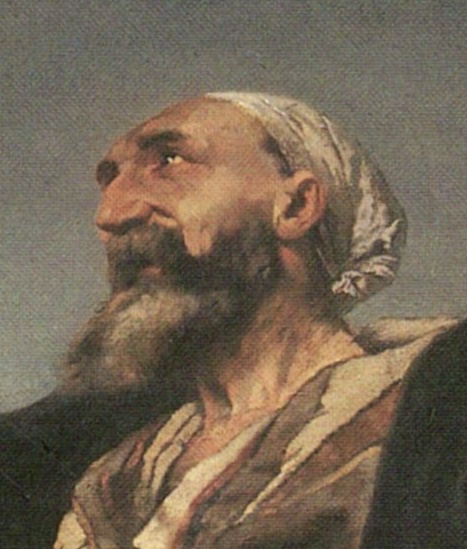
Start at the top for an easy introduction. Go further down for more detail and scholarship.
- Easy
- Intermediate
- Advanced
For young readers
About 650 years ago, in the city of Shiraz in Iran, a city famous for its gardens and roses, there lived a poet named Hafez. His real name was Muhammad. People called him Hafez, which means “the one who keeps”, because as a boy he learned the whole Qur’an by heart.
Hafez wrote poems called ghazals. A ghazal is a short poem made of pairs of lines. Each pair ends with the same rhyming sound, like a song with a chorus, and in the last pair the poet often puts in his own name, like signing a painting.
His poems talk about roses and nightingales, beautiful faces, wine and music, and about missing someone you love. But many readers believe that the “beloved” in his poems can also mean God, and that the wine can mean the joy of feeling close to God. The poems are like pictures with two layers, and each reader can find something different in them.
Hafez also liked to tease people who pretended to be very holy but were really proud or unkind. He said that an honest, loving heart matters more than showing off.
In Iran today, almost every home has a book of Hafez’s poems. On special nights, like the longest night of winter, families open the book at random, and the poem they find is read as a kind of answer or advice. His tomb in Shiraz, in a garden full of orange trees, is visited by people who come to read his poems there.
At a glance
- Lived
- Born c. 1315–1325 in Shiraz; died 1389 or 1390 in Shiraz (792 AH in the Islamic calendar is most often cited)
- Name
- Khwaja Shams al-Din Muhammad; pen name Hafez, “one who has memorised the Qur’an”
- Language
- Persian (with some Arabic verses)
- Main work
- The Divan, a collection of about 500 ghazals plus some other poems, compiled after his death
- Form
- Ghazal: a short lyric of rhyming couplets, with the poet’s name in the final couplet
- Patrons
- Rulers of Shiraz from the Inju and Muzaffarid dynasties, especially Abu Ishaq and Shah Shuja
- Titles
- Lisan al-Ghayb (“Tongue of the Unseen”), Tarjuman al-Asrar (“Interpreter of Mysteries”)
- Tomb
- The Hafezieh, Shiraz; current building designed by André Godard (1935–40)
Easy
Who was Hafez?
Hafez is widely regarded as the greatest master of the Persian ghazal, and for many Iranians he is simply the national poet, as beloved and as often quoted as Shakespeare in English. His Divan, or collected poems, is probably the most widely owned book in Iran after the Qur’an, and it has shaped poetry, music and everyday speech across Iran, Afghanistan, Tajikistan, South Asia and the former Ottoman world.
His name was Shams al-Din Muhammad. “Hafez” is a title given to a person who has memorised the whole Qur’an; the poet used it as his takhallus, or pen name, and in one of his poems he says he knew the Qur’an in its fourteen traditional readings. The honorific Khwaja indicates a respected man of learning.
He spent almost his whole life in Shiraz, the capital of the province of Fars in south-western Iran. Shiraz was a prosperous city of gardens, known for its poets; the great writer Saadi had lived there in the thirteenth century. Unlike many poets of his time, Hafez seems to have travelled very little, and he praised Shiraz in his poems, its breezes, its stream of Roknabad and its gardens of Mosalla.
Hafez was also a man of religious learning. His poems are full of references to the Qur’an and Islamic thought, and at the same time they celebrate wine, love and freedom, and mock religious hypocrisy. This combination is the key to his lasting appeal and to the many ways he has been read.
Easy
What is a ghazal?
The ghazal is a short lyric poem, usually of about five to fifteen couplets (called bayt). All the couplets share the same metre and end in the same rhyme; often a repeated word or phrase, the radif, follows the rhyme. The first couplet rhymes in both lines, announcing the pattern, and the last couplet usually contains the poet’s pen name. Hafez frequently addresses himself by name in that final couplet, as if speaking to himself or to the reader.
The ghazal came to Persian from Arabic love poetry and developed over centuries in the hands of poets such as Sanai, Attar, Rumi and Saadi. By Hafez’s time it had a rich shared vocabulary of images: the rose and the nightingale, the candle and the moth, the beloved’s curling hair and dark mole, the cupbearer (saqi) and the tavern, the ascetic and the libertine.
Each couplet in a ghazal is to some extent complete in itself, like a separate jewel on a string. Hafez was admired for making each couplet brilliant and dense with meaning, for the music of his language, and for the way the couplets shift and echo one another. One of his most famous poems opens: “If that Turk of Shiraz would take my heart in hand, / for his dark mole I would give Samarkand and Bukhara.”
Hafez’s poems are notoriously hard to translate. Persian words can carry several meanings at once, and the sound of the original, its rhymes, rhythms and wordplay, is essential to its effect. For this reason there are many very different translations, and none can replace the original.
Easy
Shiraz in Hafez’s time: poets and changing rulers
Hafez lived in turbulent times. After the collapse of the Mongol Ilkhanate in Iran in the 1330s, local dynasties competed for power. Shiraz was ruled first by the Inju family, whose last ruler, Abu Ishaq, was a generous patron of poets and a lover of pleasure. Hafez remembered his reign with affection.
In 1353 Shiraz was conquered by Mubariz al-Din Muhammad, founder of the Muzaffarid dynasty, a stern ruler who enforced religious law strictly, closing taverns and punishing drinking. Many readers see him behind the figure of the muhtasib, the moral inspector, whom Hafez mocks in his poems. In 1358 Mubariz al-Din was overthrown and blinded by his own son, Shah Shuja, who ruled until 1384 and was a cultured patron. Hafez’s relations with Shah Shuja seem to have been close but sometimes strained.
Hafez’s last years were overshadowed by the Central Asian conqueror Timur (Tamerlane), who took Shiraz in 1387 and again in 1393, when he destroyed the Muzaffarid dynasty. Hafez died in 1389 or 1390, between these two conquests. His poems reflect this world of shifting patrons, where favour could be quickly won and lost, and where piety and power were closely intertwined.
Intermediate
Life: what we know and what is legend
Firm facts about Hafez’s life are few. There are no contemporary biographies, and the earliest accounts were written decades or centuries after his death. Scholars reconstruct his life mainly from his own poems, which mention rulers, officials and events, and from a preface to the Divan attributed to a friend named Muhammad Gulandam, who says that Hafez did not collect his own poems and that he did so after the poet’s death. The date of this preface and even the identity of Gulandam have been questioned.
Later tradition fills the gaps with stories. It is said that his father was a merchant who moved from Isfahan to Shiraz and died when Hafez was young, and that the boy worked in a bakery while studying. Another story tells of his love for a beautiful woman called Shakh-e Nabat (“Branch of Sugar Candy”), and of a forty-day vigil that brought him the gift of poetry. These stories cannot be confirmed.
According to another tradition, Hafez was invited to the court of the Bahmani sultan of the Deccan in India and set out, but turned back at the port of Hormuz when a storm frightened him, sending a poem instead. The most famous anecdote, told in the late fifteenth century by the biographer Dawlatshah Samarqandi, describes a meeting with Timur. The conqueror reproached the poet for offering Samarkand and Bukhara, his great cities, for a beloved’s mole; Hafez replied that it was such extravagance that had left him so poor, and Timur was amused. Historians regard this meeting as legendary.
The poems suggest that Hafez held some position at court and perhaps taught Qur’anic studies, that he married and had a son who died young, and that he experienced periods of favour and neglect. Beyond that, his biography is largely an interpretation of his poetry.
Intermediate
Themes: love, wine, the libertine and the hypocrite
Love is at the heart of Hafez’s poetry: the beauty of the beloved, the pain of separation, the hope of union. The beloved is usually described without gender, and can be read as a human lover, a patron, or God. Wine and the tavern stand for joy, forgetting of self and freedom from social pretence, and in the Sufi tradition they also symbolise spiritual intoxication, the ecstatic love of God.
A central figure is the rend, often translated as libertine or “profligate”: someone who scorns respectability, drinks and loves openly, but whose heart is sincere. Opposed to him are the zahid (ascetic), the preacher, the Sufi who performs piety for show, and the muhtasib. Hafez repeatedly praises the honest sinner over the hypocritical saint. Another important figure is the pir-e moghan, the “elder of the Magians”, a tavern-keeper who acts as a wise spiritual guide.
Hafez also reflects on fate, the passing of time and the limits of human knowledge. His poems often urge the listener to seize the moment, to enjoy the spring and the cup because life is short and the ways of heaven are unknowable. At the same time they express hope for divine grace, which he values more than human effort or learning.
Hafez was not the first to use these figures; they came to him from earlier poets, above all from Saadi and from mystical poets such as Attar and Rumi, and from his Shirazi contemporaries such as Khwaju Kermani and the satirist Obeyd Zakani. What distinguished Hafez was the concentration of his language and the way he played the conventional images against each other, so that familiar words suddenly revealed new meanings.
The power of his poetry lies in its ambiguity. A single couplet can be read at once as a love poem, a comment on court politics, a satire on religious officials and a mystical meditation. Hafez rarely resolves these layers, and this openness invites every reader to find himself or herself in the poems.
Intermediate
The Divan: manuscripts and editions
Hafez’s poems circulated during his lifetime, sung and copied, and were gathered into a Divan after his death. The Divan contains mainly ghazals, fewer than 500 of which are generally accepted as authentic, together with a small number of qasidas (odes), a mathnavi, qit‘as (occasional pieces) and ruba‘is (quatrains). The oldest reliable manuscripts date from the fifteenth century, a few decades after his death.
Because the Divan was copied so often, around 1,700 manuscripts survive, and they differ considerably. Poems were added under Hafez’s name, the order of couplets varies, and many words have alternative readings. Establishing an authentic text is a major scholarly task.
The most influential modern edition was published in 1941 by Mohammad Qazvini and Qasem Ghani, based on early manuscripts; it contains 495 ghazals. Parviz Natel-Khanlari’s edition (1980, revised 1983), using a larger number of early manuscripts, contains 486. Other editions and commentaries, including the widely used Hafez-nameh of Baha al-Din Khorramshahi, continue the work of explaining and correcting the text. In the Ottoman world, the sixteenth-century commentary of Sudi of Bosnia was highly influential.
In Iran the Divan is also used for fal-e Hafez, a form of bibliomancy: a person makes a wish or asks a question, opens the book at random and interprets the poem found there. This practice is especially popular on Yalda night, the winter solstice, and at Nowruz, the Persian New Year. Street vendors in Iran still offer fortunes drawn from Hafez, sometimes selected by trained birds.
Intermediate
Influence and reception around the world
In the Persianate world, which stretched from the Ottoman Empire to Mughal India and Central Asia, Hafez became the model for lyric poetry. Later poets imitated and answered his ghazals, and calligraphers and painters illustrated them. Mughal emperors reportedly consulted his Divan for omens. In South Asia his influence can be traced in the Urdu ghazal of poets such as Ghalib and in the Persian and Urdu poetry of Muhammad Iqbal.
Hafez is also part of everyday life. Iranians quote his couplets as proverbs, schoolchildren learn his poems by heart, and his ghazals are central to the repertoire of Persian classical music, sung by masters such as Mohammad-Reza Shajarian as well as by popular singers. Calligraphers copy his verses on tiles, carpets and posters, and the Divan is a customary gift at weddings and on New Year. Few poets anywhere have remained so present in the daily speech and rituals of ordinary people six centuries after their death.
In Europe, Hafez was introduced by Sir William Jones, who published “A Persian Song of Hafiz” in 1771. Joseph von Hammer-Purgstall’s complete German translation of 1812–13 deeply moved Goethe, who responded with his West–östlicher Divan (West–Eastern Divan, 1819), a collection of poems in dialogue with Hafez. Through Goethe, Hafez influenced German Romanticism and later writers and composers. In America, Ralph Waldo Emerson admired and translated him, and English versions by Gertrude Bell (1897) and many others followed.
Popular modern English “versions” of Hafez, such as those by Daniel Ladinsky, have sold widely, but scholars point out that they are free inventions rather than translations of Hafez’s poems. Their popularity shows the attraction of Hafez’s name, but readers seeking the real poet should turn to translations based on the Persian text.
In Iran, Hafez’s tomb in Shiraz, the Hafezieh, is a place of pilgrimage for lovers of poetry. A first memorial was built in 1452 under the Timurid prince Babur Mirza; Karim Khan Zand erected a larger structure in 1773; and the present pavilion, with eight columns and a copper dome shaped like a dervish’s hat, was designed by the French architect André Godard and built in 1935–40. The day of 20 Mehr in the Iranian calendar (around 11–12 October) is celebrated as Hafez Day.
Advanced
Debate: mystic or worldly poet?
The oldest and most persistent question about Hafez is how to read his wine and love. One tradition, strong among Sufis and many Persian commentators, reads his poems as mystical allegory: the beloved is God, wine is divine love, the tavern is the Sufi gathering place and the libertine is the true lover who has abandoned worldly reputation. The titles Lisan al-Ghayb and Tarjuman al-Asrar express this view of Hafez as a voice of hidden truths.
Another tradition reads him more literally, as a poet of real love and real wine, a sceptic or humanist who mocked religious authority. In the Ottoman Empire, Sudi’s commentary tended to read Hafez literally, in contrast to more mystical commentators; debates over whether his poems could be read by pious Muslims occurred in several periods. Modern Iranian readers have seen him variously as a Sufi saint, a freethinker, a patriot and a critic of tyranny.
Many scholars today argue that the dichotomy is false. The ghazal tradition deliberately fused erotic, courtly and mystical language, so that the same image could work on several levels. Hafez exploits this ambiguity with unusual skill, and his refusal to settle on one meaning is itself part of his art and perhaps of his religious outlook, which values sincerity and grace over outward rules. Reading Hafez well means holding these layers together rather than choosing one.
Advanced
Scholarly questions: unity, text and history
The unity of the ghazal. Western readers since the eighteenth century have puzzled over the apparent lack of logical connection between couplets in Hafez’s ghazals. In the 1940s the British orientalist A. J. Arberry argued that Hafez’s poems possess a unity of theme and form of their own, a view developed by later scholars who analyse patterns of imagery, sound and argument. Others maintain that the couplet, not the poem, is the basic unit of meaning in the Persian ghazal, and that readers should not expect Western-style unity.
The text. Because manuscripts disagree so much, every interpretation depends on editorial choices: which poems are authentic, which readings of words are original, and in what order the couplets should stand. The Qazvini–Ghani and Khanlari editions made great progress by prioritising fifteenth-century manuscripts, but debate continues, and new manuscripts and computational methods are being brought to bear on the question.
History and biography. Scholars have tried to date poems by identifying rulers, ministers and events they mention, and so to trace Hafez’s development and his relations with patrons. This method has produced useful results but also risks circularity, since the same poems are then used to reconstruct the biography. The legends in later biographical dictionaries, such as Dawlatshah’s, tell us more about how Hafez was remembered than about his life.
Reception history. Finally, a growing field studies how Hafez has been read, used and translated in different cultures, from Ottoman commentaries and Mughal albums to Goethe, Iranian nationalism and modern popular versions. In this sense “Hafez” is not only a fourteenth-century poet but a long conversation across six centuries.
Key ideas
- Ghazal
- A short lyric of rhyming couplets on love and longing, which Hafez brought to its highest point in Persian.
- Ambiguity
- His images can be read as human love, court politics and mystical devotion at the same time.
- Rend (the libertine)
- The sincere nonconformist who scorns respectability, set against the hypocritical ascetic and moral inspector.
- Critique of hypocrisy
- Hafez mocks outward piety that hides pride and power, valuing an honest heart and divine grace.
- Wine and the tavern
- Symbols of joy, freedom and, in Sufi reading, the ecstasy of divine love.
- Fal-e Hafez
- Opening the Divan at random for guidance, a living custom in Iran, especially on Yalda and Nowruz.
- A textual puzzle
- Hundreds of varying manuscripts make establishing the authentic Divan a continuing scholarly task.
Records
- c. 1315 — Hafez is born in Shiraz (estimates range from c. 1315 to c. 1325).
- c. 1343 — Abu Ishaq Inju becomes ruler of Shiraz and a patron of poets.
- 1353 — Mubariz al-Din Muhammad, founder of the Muzaffarid dynasty, takes Shiraz and imposes strict religious rule.
- 1358 — Shah Shuja overthrows and blinds his father and begins a reign (to 1384) that brings Hafez patronage.
- 1387 — Timur captures Shiraz for the first time.
- c. 1390 — Hafez dies in Shiraz (1389 or 1390); his friend Gulandam is said to have compiled the Divan.
- 1452 — The Timurid prince Babur Mirza builds the first memorial over Hafez’s grave.
- 1771 — William Jones publishes “A Persian Song of Hafiz”, introducing Hafez to English readers.
- 1812 — Joseph von Hammer-Purgstall’s German translation of the Divan appears (to 1813).
- 1819 — Goethe publishes the West–östlicher Divan, inspired by Hafez.
- 1935 — Construction of the present Hafezieh, designed by André Godard, begins (completed c. 1940).
- 1941 — Qazvini and Ghani publish their critical edition of the Divan.
Glossary
- Divan
- A poet’s collected poems, usually arranged by form and rhyme.
- Ghazal
- A short lyric poem in rhyming couplets, often about love.
- Bayt
- A couplet, the basic unit of Persian poetry.
- Takhallus
- A poet’s pen name, usually placed in the last couplet of a ghazal.
- Radif
- A word or phrase repeated after the rhyme at the end of each couplet.
- Saqi
- The cupbearer who serves wine, a stock figure of the ghazal.
- Rend
- A libertine or nonconformist; in Hafez, a sincere lover opposed to hypocrites.
- Muhtasib
- An official who enforced public morals and fair trade in Islamic cities.
- Sufism
- The mystical tradition of Islam, seeking direct love and knowledge of God.
- Yalda
- The Iranian celebration of the longest night of the year, at the winter solstice.
Questions and answers
Why is he called Hafez?
Hafez is a title for someone who has memorised the whole Qur’an. The poet had done so and used the word as his pen name.
Was Hafez writing about real wine or about God?
Both readings are old. Many scholars think he deliberately used images that work on several levels at once, so the poems can be love poems and spiritual poems together.
What is fal-e Hafez?
It is a way of asking Hafez for advice: you make a wish, open his Divan at random and read the poem as an answer. Iranian families often do this on Yalda night.
Did Hafez really meet Timur?
Probably not. The famous story first appears in a biography written about a century after Hafez’s death, and historians treat it as a legend.
How many poems did Hafez write?
Modern critical editions accept a little under 500 ghazals, plus a small number of other poems. Many more poems were attributed to him in later manuscripts.
Why do translations of Hafez differ so much?
His Persian is full of double meanings, wordplay and music that cannot all be carried over, and the manuscripts differ. Some popular English books are free inventions rather than translations.
How reliable is our knowledge of his life?
Not very. There are no contemporary biographies; scholars rely on his poems, the Gulandam preface and later, often legendary, accounts.
Sources and further reading
- Hafez. Wikipedia
- Divan of Hafez. Wikipedia
- Ghazal. Wikipedia
- Muzaffarids (Iran). Wikipedia
- Tomb of Hafez. Wikipedia
- West–östlicher Divan. Wikipedia
- A. J. Arberry, Fifty Poems of Hafiz. Cambridge University Press, 1947
Related
- RumiPersian-language poet and Sufi teacher whose verse explores love and spiritual transformation.
- ShahnamehPersian epic by Ferdowsi recounting Iran's legendary kings and historical past.
- Johann Wolfgang von GoetheGerman writer whose poetry, drama and fiction, from the Sturm und Drang to Weimar Classicism, became central to German literature and European culture.
- One Thousand and One NightsA collection of tales that developed over centuries from several storytelling traditions.
- Ibn BattutaMoroccan traveler whose account describes journeys across Africa, Asia and parts of Europe.
Written with AI assistance from the published sources listed above, and revised as new research appears.