Course · 13 stops
How Writing Survives: Clay, Stone, Print and Voice
Much of what people have written has been lost. What survives has depended on material, on accident and on who kept copying — clay baked by a burning palace, a stone slab reused in a fort wall, a Gospel book stolen for its cover, palm leaves recopied on another island — and words can also survive with no material at all, in the voices of trained performers. This course asks three questions at each stop: what survived, and how? What was lost, and how do we know? And how does a tradition kept in memory and performance differ from one kept on clay, stone, skin, wood, leaf or paper?
The thirteen stops run in chronological order, from the first clay tablets of Uruk to the burning of Maya books in 1562. They are not a ladder from cruder to better media: clay tablets outlasted wax boards, woodblocks stayed in use beside metal type, hand copying went on after printing, and the oral epic needed none of them. Where stops are linked by real contact or a shared text, the notes say so; where they are only compared, they say that too. Open any stop to read the full article, or jump to that year on the map.
- 1
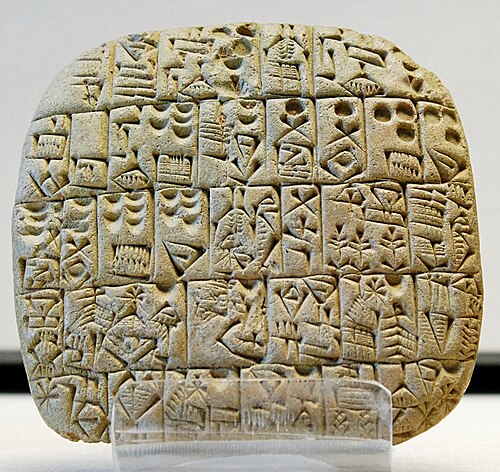
c. 3350–3200 BCE · Uruk (Sumer)
Cuneiform
Some of the earliest known writing appeared at Uruk in southern Mesopotamia around 3350–3200 BCE, as accounts drawn and impressed in clay. Most tablets were only sun-dried, and unfired clay could be softened and reused; many everyday tablets were thrown away, and wax-covered writing boards rarely survive at all. Paradoxically, disaster helped: when palaces and libraries burned, the fire baked their tablets hard enough to last thousands of years. Estimates of excavated tablets run from half a million to two million, yet only a fraction are published — surviving is not the same as being read.
- 2
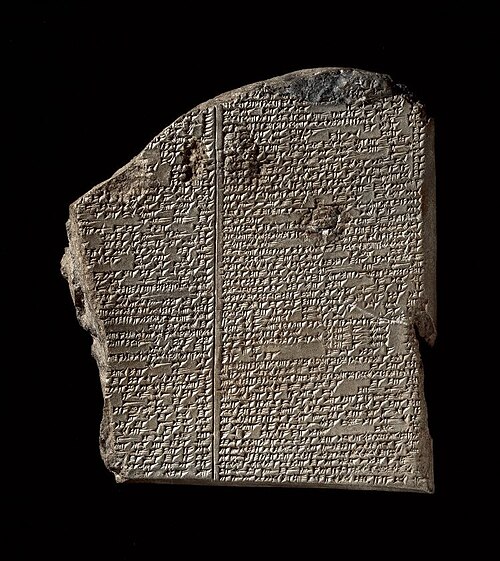
c. 1800–1700 BCE · Babylonia
Epic of Gilgamesh
Around 1800–1700 BCE an Akkadian poet wove older Sumerian poems about Gilgamesh into one epic, and scribes went on copying and revising it on clay for more than a thousand years. No complete manuscript exists: the best-known version is pieced together from dozens of fragments, many from the libraries of the Assyrian king Ashurbanipal, which lay buried in the ruins of Nineveh after 612 BCE. Forgotten once cuneiform fell out of use, the poem returned when George Smith recognised its flood story in 1872, and new fragments are still being identified.
- 3
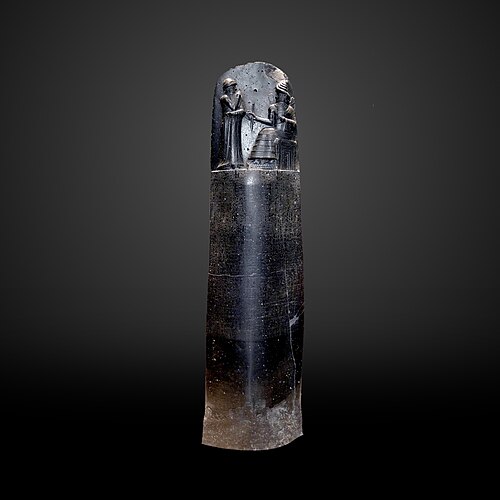
c. 1754 BCE · Babylon
Code of Hammurabi
Hammurabi had his laws carved on basalt steles so that any wronged man could have them read aloud, and the epilogue curses any later king who alters or erases the words. Stone was no guarantee: in the twelfth century BCE the surviving stele was probably carried off to Susa as booty, and several of its columns were polished away. The missing laws are partly known from humbler copies — more than 50 manuscripts on clay tablets and other stone fragments, copied by scribes for over a thousand years, some kept in Ashurbanipal's library alongside Gilgamesh.
- 4
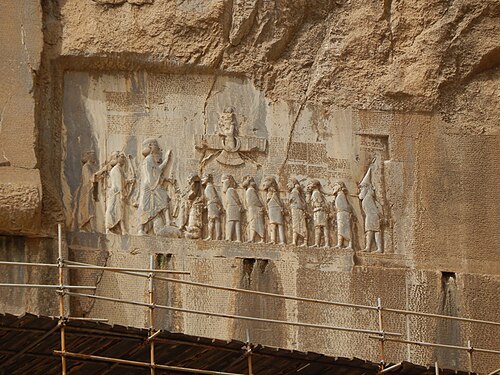
c. 520 BCE · Mount Bisotun, Kermanshah Province, western Iran (Achaemenid Persian Empire)
Behistun Inscription
Around 520 BC Darius I had his account of how he took the throne carved high on a cliff in western Iran, in Old Persian, Elamite and Babylonian cuneiform. Its height probably spared it much deliberate damage, though water has worn parts away, and Darius says the text was also sent across his lands; an Aramaic translation copied on papyrus about a century later survives from Elephantine in Egypt. In the 19th century Henry Rawlinson's copies of it, together with many other inscriptions and the work of rival scholars such as Edward Hincks, made Akkadian cuneiform readable again by 1857, opening texts such as Hammurabi's laws and the Akkadian Gilgamesh epic.
- 5
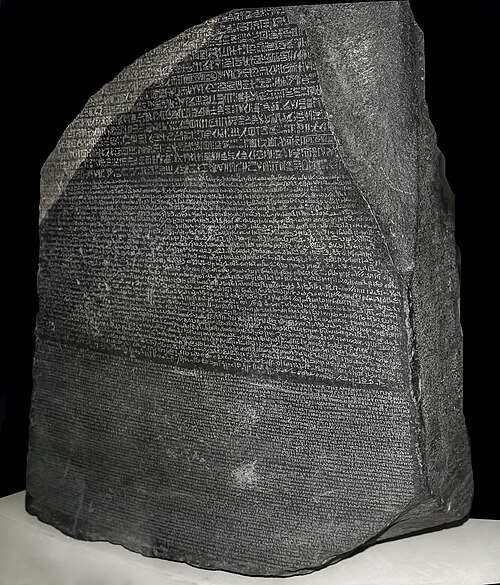
196 BCE · Found at Fort Julien near Rosetta/Rashid (Ptolemaic Egypt); now British Museum, London
Rosetta Stone
In 196 BC a council of Egyptian priests ordered that their decree honouring Ptolemy V be set up in every temple in hieroglyphs, Demotic and Greek. After the temples closed and hieroglyphs fell out of use, this broken copy survived as building stone in the walls of a fort near Rosetta, where French soldiers found it in 1799. Its role in modern decipherment is often compared with Behistun's: it gave scholars parallel versions of one text, but Champollion's 1822 breakthrough also needed Coptic and many other inscriptions.
- 6
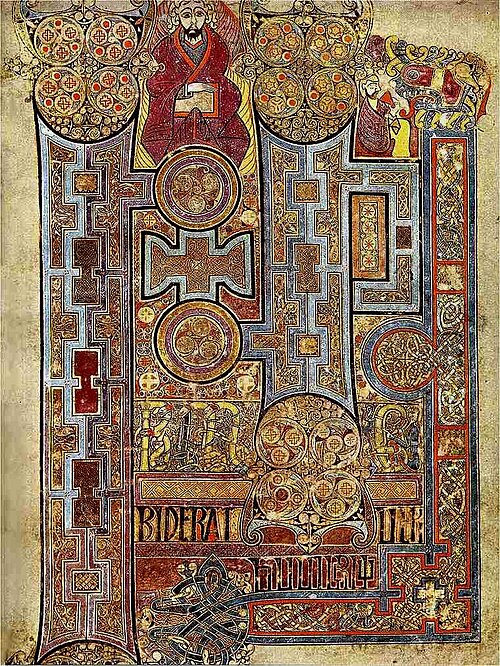
c. 750–850 CE · Trinity College Library, Dublin (made by the Columban community of Iona and Kells)
Book of Kells
Around 800, monks of St Columba's community — probably starting on Iona and continuing at Kells after Viking raids — wrote and painted the four Gospels in Latin on calfskin vellum. Venerated as a sacred object and probably used at the altar rather than studied, it was stolen in 1007, by the usual dating, for its jewelled cover and found months later under a sod, a theft that may explain the leaves missing at its beginning and end. In the 1650s, with Cromwell's troops quartered in Kells, it was sent to Dublin for safety; 340 leaves remain today.
- 7
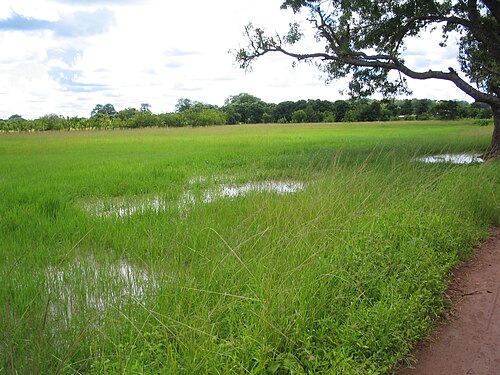
c. 1235 · Kangaba, Manding heartland (upper Niger, southwestern Mali)
Epic of Sundiata
Unlike the Book of Kells, the Epic of Sundiata has no single object that could be stolen or burned. It tells of the founder of the Mali Empire, whose victory at Kirina tradition places around 1235, and for centuries it has been carried by hereditary bards, the jeliw, in performances that vary by family and region while keeping a remarkably stable core. French colonial officers began writing accounts of it down only in 1889, and even D. T. Niane's famous 1960 book is a prose retelling of one bard's narration, while the recitation at Kangaba's Kamablon ceremony has never been recorded at all.
- 8
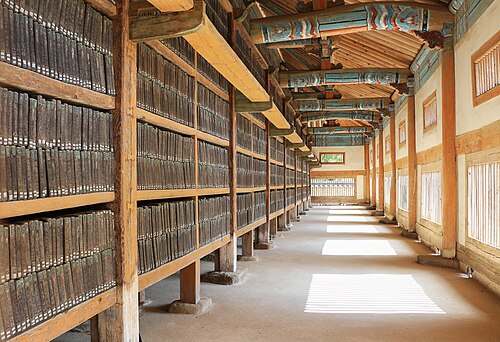
1237–1248 · Haeinsa (storage)
Tripitaka Koreana
In 1232, a few years before the traditional date of Kirina, Mongol invaders burned Goryeo's first set of printing blocks for the Buddhist canon; from 1237 to 1248 the court had the whole canon carved again on more than 81,000 wooden blocks, carefully collated against three earlier editions. Woodblocks can print many copies, but the blocks themselves can be lost: the first edition is known today from surviving printed copies, many of them in Japan. The second set has survived nearly eight centuries, through invasions, fires at Haeinsa and the Korean War, and the naturally ventilated storage halls at Haeinsa have helped keep the wood from rotting.
- 9
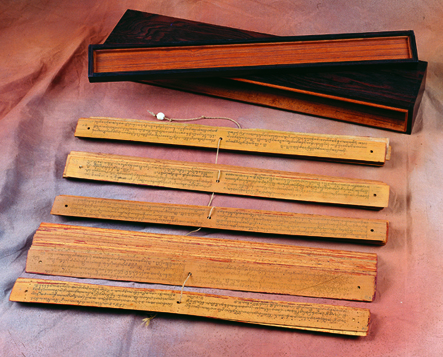
1365 · Majapahit court, East Java (Majapahit)
Nagarakretagama (Desawarnana)
Where Goryeo preserved one master set of blocks, this poem survived by being copied again and again. The Buddhist poet Prapañca finished his Old Javanese praise of King Hayam Wuruk of Majapahit in 1365, but no copy from his lifetime survives; scribes in Bali and Lombok, where Javanese court literature lived on after Majapahit fell, kept recopying it on palm leaves, and even its familiar title comes from a Balinese copyist's note of 1740. In 1894 a Dutch scholar took a Lombok copy before the palace there was burned in a colonial attack and believed it was the only one — until more copies came to light in Bali from 1978.
- 10
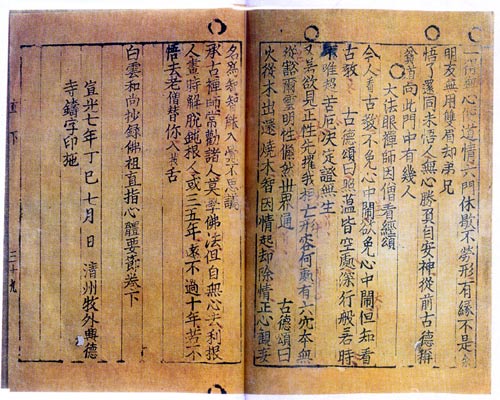
1377 · Heungdeoksa, Cheongju (Goryeo)
Jikji
Back in Goryeo, whose temples had long experience of printing, monks printed this Seon Buddhist anthology at Heungdeoksa near Cheongju in 1377 with cast metal type, making it the oldest surviving book printed that way. “Surviving” matters: records show Korea used metal type more than a century earlier, but no metal-printed copy of those books is known, and even of Jikji only the second volume remains, missing its first leaf, in the Bibliothèque nationale de France in Paris. Its full text survives through an older technology: a woodblock edition carved and printed the following year.
- 11
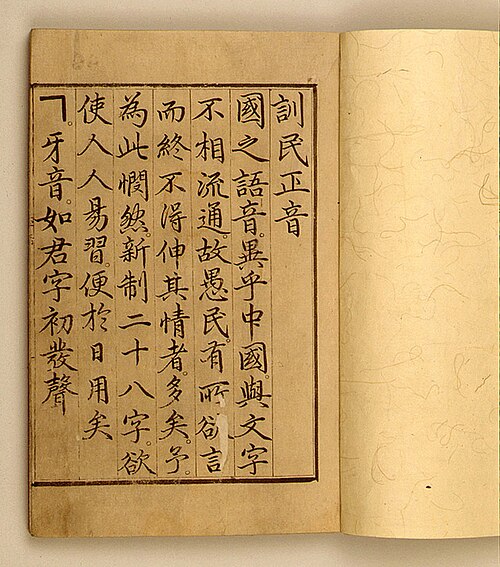
1443–1446 · Hanseong (Joseon)
Hunminjeongeum
In 1443 King Sejong announced 28 letters he had created for writing Korean, and the woodblock-printed book Hunminjeongeum of 1446 explained how they were designed. The script met opposition at court and a ban by King Yeonsangun in 1504, but it lasted because it was useful, in letters, poetry and novels by women, monks and commoners, and in royal proclamations meant for the people. The book itself nearly vanished: the explanatory Haerye edition was thought lost for centuries, until a copy missing its first two leaves surfaced in Andong in 1940.
- 12
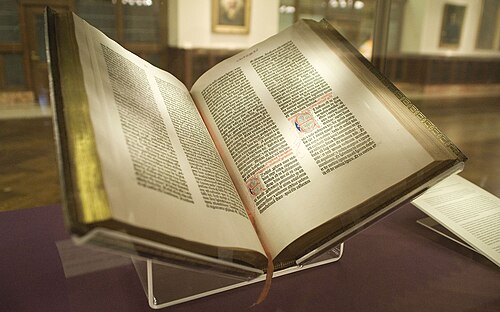
1452–1455 · Mainz (Holy Roman Empire)
Gutenberg Bible
In Mainz, Gutenberg's workshop finished printing about 180 copies of the whole Latin Bible by 1455, in the Vulgate translation that, mixed with older Latin readings, also underlies the Gospels of the Book of Kells. There is no evidence that Gutenberg knew of Korean metal type, and his methods differ, so most historians see European printing as an independent development; that Hangeul was created in the same years is a coincidence of timing. Printing multiplied copies, yet only about 49 survive, around 21 complete, and because buyers had each copy decorated and bound by hand, no two look alike.
- 13

c. 300 BCE – 1697 · Palenque and the Maya lowlands (Maya kingdoms)
Maya script
Maya scribes wrote for about two thousand years, on stone monuments, painted pottery and folding books of bark paper. On 12 July 1562 the friar Diego de Landa had dozens of books burned at Maní in Yucatán; only four Maya hieroglyphic books (codices) are known today, and after the last independent Maya kingdom fell in 1697 the ability to read the glyphs appears to have died out. With no true bilingual like the Rosetta Stone, decipherment from the 1950s relied on Landa's own misunderstood “alphabet”, colonial dictionaries, the living Mayan languages and the inscriptions that stone had kept — and Maya communities today are learning to read and write the glyphs again.
This course was written with the help of AI from the sources listed in each article.