Comece pelo início para uma introdução simples. Continue descendo para mais detalhes e pesquisas.
- Fácil
- Intermediário
- Avançado
Para jovens leitores
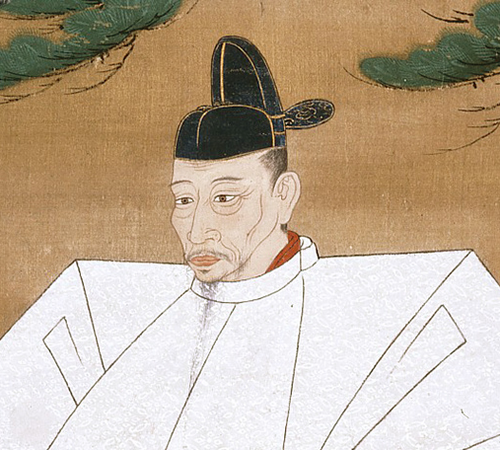
About 450 years ago, Japan was split into many little kingdoms whose lords fought each other all the time. Toyotomi Hideyoshi was born into a poor family in the middle of this time of war, and nobody expected him to become important.
He became a servant and then a soldier of a powerful lord called Oda Nobunaga. He was clever, quick and very good at talking people round, so he kept being promoted until he was one of Nobunaga’s top generals.
When Nobunaga was killed in 1582, Hideyoshi moved fast, defeated the man who had killed him, and then, one by one, made all the other lords of Japan obey him. By 1590 the whole country had one ruler for the first time in more than a hundred years.
Then Hideyoshi did something terrible. He decided to conquer China, and sent huge armies to attack Korea, which stood in the way. The war lasted almost seven years. Many Korean towns were burned, many people were killed, and many thousands were taken away to Japan — nobody knows exactly how many.
Hideyoshi died in 1598, while the war was still going on, and his soldiers went home. His son was only five years old. The lords began to quarrel, and another lord, Tokugawa Ieyasu, took power. In Japan many people admire the poor boy who united the country, while others criticise his cruelty and his invasion; in Korea he is remembered above all as the man who started a cruel war.
Em resumo
- Lived
- 1537–1598. Born, according to the usual account, on the 6th day of the 2nd month of Tenbun 6 (1537) in Nakamura, Owari Province (today part of Nagoya); a second tradition gives New Year’s Day of 1536. Died at Fushimi Castle on the 18th day of the 8th month of Keichō 3 (18 September 1598)
- Names
- Kinoshita Tōkichirō as a young man; the surname Hashiba from 1573; in 1586 the imperial court granted him the new lineage name (uji) Toyotomi; Hashiba was his surname. Europeans called him “Taicosama”, from his later title taikō
- Titles
- Kampaku (imperial regent) from 1585 and daijō-daijin (grand chancellor) from 1586 — he never became shogun. After handing the regency to his nephew Hidetsugu at the end of 1591 he was called taikō, “retired regent”
- Main achievements
- Completed the military unification of Japan (Shikoku 1585, Kyushu 1587, the Hōjō of Odawara 1590); nationwide land surveys (Taikō kenchi); the sword hunt of 1588; rules separating warriors from farmers; Osaka Castle
- Wars abroad
- Ordered the invasions of Korea of 1592–1593 and 1597–1598 (in Korea the Imjin War and Jeongyu War, in Japan the Bunroku and Keichō campaigns), with the declared aim of conquering Ming China. He directed the first from Nagoya in Hizen (northern Kyushu) and the second from Kyoto and Osaka, and never crossed to Korea himself
- Successor
- His son Hideyori (born 1593), placed under a council of five great lords (the Five Elders) and five commissioners. Tokugawa Ieyasu won the Battle of Sekigahara in 1600, and the Toyotomi were destroyed at Osaka in 1615
- Main sources
- Hideyoshi’s own letters and orders; court and temple diaries; reports of Jesuit missionaries such as Luís Fróis; the Kampaku ninkanki and other accounts he commissioned; later biographies such as Oze Hoan’s Taikōki (1620s); Korean records such as the Veritable Records of King Seonjo
- Debated
- Why he invaded Korea and how far he understood Ming China; his birth year; how far his reforms were new; how he should be remembered in Japan and in Korea
No mapa
Enquanto isso, em outras partes do mundo
Outros temas desta biblioteca de mais ou menos os mesmos anos, em lugares distantes do mundo.
- Bronzes do Benimc. 1300–1897 · Cidade do Benim (Reino do Benim)
- Akbar1556–1605 · Fatehpur Sikri (Império Mogol)
- Mesquita de Selimiye1568–1575 · Edirne (Império Otomano)
- Jornada ao Oestec. 1592 · Nanquim (China da dinastia Ming)
- Códice Florentinoc. 1545–1577 · Tlatelolco, Cidade do México (Nova Espanha)
- William Shakespeare1589–1613 · Londres (Inglaterra)
Fácil
Who was Toyotomi Hideyoshi?
Toyotomi Hideyoshi was a Japanese warlord who brought the whole of Japan under one ruler. He is counted as the second of the “three unifiers” who ended more than a century of civil war: Oda Nobunaga began the work, Hideyoshi completed it in 1590, and Tokugawa Ieyasu, after Hideyoshi’s death, turned it into a government that lasted until 1868.
What made his story famous in Japan is where he started. He came from a humble background, not an established samurai house; his father is described as a farmer or a foot soldier in Owari Province, near modern Nagoya, and Hideyoshi began his career as a low servant of Nobunaga. No one before him had risen from such a background to the highest offices of the imperial court.
Hideyoshi used those court offices, not the old title of shogun, to rule. He became kampaku, the emperor’s regent, in 1585, and in 1586 the court granted him a new lineage name, Toyotomi. From his great castle at Osaka and his palaces in Kyoto he measured the land of the whole country, took weapons away from farmers and moved great lords from one province to another.
Outside Japan he is remembered above all for the war he started. In 1592 he sent an invasion force usually put at about 160,000 men into Korea, announcing that he would go on to conquer Ming China. The war, which Koreans call the Imjin War, lasted until after his death in 1598, devastated much of Korea and failed to achieve Hideyoshi’s aims, bringing Japan no lasting territorial gain. This article follows his life, looks at what he changed in Japan and asks why he went to war abroad.
Fácil
From servant to general
Even Hideyoshi’s birth is uncertain. A biography he commissioned from his secretary Ōmura Yūko, the Kampaku ninkanki, gives the 6th day of the 2nd month of Tenbun 6, which is 1537; other traditions, such as the later Taikō sujōki, say he was born on New Year’s Day of the year before, 1536. The Japanese encyclopedia Nihon daihyakka zensho notes that the 1536 story is tied to legends that he was a child of the monkey year and of the mountain god Hiyoshi, and that 1537 is now usually preferred. His father died when he was a boy, and his mother remarried.
As a young man he served a lord of the Imagawa house before joining the service of Oda Nobunaga, the rising lord of Owari, in the 1550s. Japanese reference works date this to 1554, the English Wikipedia to 1558. He began as a menial servant. A famous story says that he warmed Nobunaga’s sandals inside his clothes on cold mornings; it is a legend, but it shows how later generations imagined his eager service.
In 1561 he married Nene (later known as Kita no Mandokoro), the adopted daughter of an archer captain, and around this time he called himself Kinoshita Tōkichirō. He made his name in Nobunaga’s wars in Mino in the 1560s, especially by winning over enemy commanders; later traditions also credit him with building a fort at Sunomata, but his role there is uncertain. In 1573 he began calling himself Hashiba, and after the destruction of the Azai family later that year Nobunaga gave him their lands in northern Ōmi. He then built a new castle and castle town at Nagahama on Lake Biwa.
From 1577 Nobunaga sent him west to fight the powerful Mōri family. Hideyoshi became known as a master of sieges. He starved the castles of Miki and Tottori into surrender, and in 1582 he surrounded Takamatsu Castle in Bitchū with an artificial lake by damming a river. He was still besieging it when news came that Nobunaga was dead.
Fácil
1582–1590: the road to ruling Japan
On the 2nd day of the 6th month of Tenshō 10 (1582, Japanese lunar calendar), Nobunaga was attacked at the Honnō-ji temple in Kyoto by his own general Akechi Mitsuhide and died. Hideyoshi quickly made peace with the Mōri, marched his army back towards Kyoto and defeated Mitsuhide at Yamazaki, only eleven days after Nobunaga’s death. Avenging his lord gave him a strong claim to lead Nobunaga’s former followers.
In the meeting of Oda retainers at Kiyosu he outmanoeuvred the senior general Shibata Katsuie, and in 1583 he defeated Katsuie at Shizugatake. In the same year he began building Osaka Castle. In 1584 he fought Tokugawa Ieyasu and Nobunaga’s son Nobukatsu at Komaki and Nagakute; he lost the main battle there but won the war by making a separate peace with Nobukatsu, and in 1586 Ieyasu submitted to him.
Hideyoshi then turned to the rest of Japan. He conquered Shikoku in 1585 and Kyushu in 1587, where the Shimazu of Satsuma surrendered. In 1590 he besieged the Hōjō in Odawara with an enormous army, and the lords of the north came to swear loyalty. After the suppression of a last revolt in the north in 1591, every region of Japan obeyed one ruler.
He did this as a servant of the emperor, not as a shogun. In 1585 he was adopted into the Konoe, one of the highest noble houses, and appointed kampaku; in 1586 he became daijō-daijin and received the lineage name Toyotomi. He often ordered lords to stop fighting each other in the emperor’s name and then attacked those who refused, presenting his wars as the punishment of rebels against the court. In 1588 the emperor Go-Yōzei visited his new palace in Kyoto, the Jurakudai, and the assembled lords swore loyalty to the emperor and to Hideyoshi.
Intermediário
Ruling the realm: land surveys, the sword hunt and fixed status
Hideyoshi’s most lasting work was not a battle but a set of rules. From the early 1580s, and most intensively in the 1590s, his officials surveyed fields across the country. These surveys, called Taikō kenchi, recorded each plot under the name of the farmer responsible for it and valued it in koku of rice. Every domain could now be described by a single figure of assessed yield, which made it possible to move lords around, set their military duties and tax the villages in a uniform way. The surveys also cut through older, overlapping rights to land.
In 1588 he issued the sword hunt edict. Farmers were ordered to hand over swords, short swords, bows, spears and guns; the weapons were to be used in building the Great Buddha hall that he was raising at Hōkō-ji in Kyoto. In 1591 another order forbade warriors to become townspeople (chōnin) or farmers, and farmers to leave their fields to become townspeople or artisans. Japanese historians see these measures as the beginning of the separation of warriors from farmers that the Tokugawa later made into a fixed social order. In 1592 a census of households and people followed, partly to mobilise men for the war in Korea.
These policies did not come from nowhere. Earlier lords had surveyed their own lands, and Shibata Katsuie had already taken weapons from farmers in Kaga in 1576; Hideyoshi himself disarmed armed temples such as Mount Kōya in 1585. What was new was the scale: for the first time one ruler applied such rules to the whole country. Historians also note that the sword hunt was less a complete disarmament of villages than a rule about who was allowed to bear weapons as a sign of status.
Hideyoshi did not abolish the great lords. Most kept their lands as long as they obeyed him, sent hostages and served in his wars. The American historian Mary Elizabeth Berry has described his rule as a kind of federal settlement with the daimyo rather than a centralised monarchy. The weaknesses of this arrangement became clear after his death, when the lords he had balanced against each other fought for power.
Intermediário
Gold, tea and castles
Hideyoshi liked to display his power. Osaka Castle, begun in 1583, became the centre of his rule; in Kyoto he built the Jurakudai palace and later the castle of Fushimi. He started a Great Buddha at Hōkō-ji in Kyoto to rival the one at Nara, and he staged spectacular events such as the Kitano Grand Tea Gathering of 1587, the cherry-blossom party at Yoshino in 1594 and the blossom viewing at Daigo-ji in the spring of 1598.
The tea ceremony was part of politics. Hideyoshi employed the great tea master Sen no Rikyū and had a portable golden tea room built, covered in gold leaf, which he could set up to impress visitors. Yet in 1591 Hideyoshi ordered Rikyū to kill himself; the reasons are still unclear.
The age is called the Azuchi–Momoyama period, after Nobunaga’s Azuchi Castle and Momoyama, the later name of the hill where Hideyoshi’s Fushimi Castle stood. Demand for fine tea wares rose with the fashion for tea among the ruling class, and during the invasions of Korea Japanese lords seized Korean ceramics and took Korean potters back to Japan, a story told in the article on the Imjin War.
Intermediário
Christians, temples and the edicts of 1587 and 1596
When Hideyoshi took power there were many Japanese Christians, especially in Kyushu, and some daimyo had become Christian. At first he was friendly to the Jesuit missionaries. In the summer of 1587, at the end of the Kyushu campaign, he suddenly issued an edict ordering the missionaries (bateren, from the Portuguese padre) to leave Japan. Historians link the edict to his worries about the loyalty of Christian lords, the destruction of temples and shrines in Christian domains and the sale of Japanese people abroad by Portuguese traders. European merchants were still allowed to come and trade.
In 1596 the Spanish ship San Felipe was wrecked on the coast of Shikoku, and rumours spread that the Spanish used missionaries to prepare for conquest. Hideyoshi ordered the arrest of Franciscan friars and Japanese believers in Kyoto and Osaka. Twenty-six people — Japanese believers and foreign missionaries — were crucified at Nagasaki in February 1597; the Catholic Church later declared them saints.
Hideyoshi also kept the great Buddhist institutions under control, as Nobunaga had done, but he rebuilt and endowed many temples and shrines, and he sponsored the Great Buddha of Hōkō-ji. The statue was damaged in an earthquake in 1596 before it could be dedicated. At the end of his life he asked to be worshipped after death as a god.
Intermediário
The invasion of Korea, 1592–1598
Hideyoshi spoke of conquering China as early as 1585, just after becoming kampaku. After the Kyushu campaign of 1587 he told the Sō family of Tsushima, who managed Japan’s relations with Korea, to bring the king of Joseon to his court. The Sō, who depended on trade with Korea, softened the demand into a request for an embassy to congratulate him on unifying Japan. In 1590 the Joseon envoys Hwang Yun-gil and Kim Seong-il met Hideyoshi in Kyoto. He treated them as if Korea had submitted, and his reply demanded that Joseon lead his army into Ming China. On their return the two envoys reported differently on whether Japan would attack, a disagreement still remembered in Korea.
In 1591 Hideyoshi ordered the building of a great base at Nagoya on the coast of Hizen in northern Kyushu. In the spring of 1592 an expeditionary army whose regular land forces are commonly estimated at about 160,000 men crossed to Korea; totals including other personnel vary. They took Busan, then Hanseong (Seoul) within three weeks, and Pyongyang soon after. Hideyoshi, delighted, wrote that he would move the Japanese emperor to Beijing, make his nephew Hidetsugu regent of China and settle himself at the port of Ningbo, from where he spoke of going on to India. He planned to cross to Korea himself, but those around him persuaded him to put it off, and he never went.
The plan soon broke down. The Korean navy under Yi Sun-sin and others cut the sea lanes, “righteous armies” of volunteers rose across the country, and Ming China sent armies that retook Pyongyang in early 1593. The Japanese withdrew to forts on the south coast while Japanese and Ming negotiators, often misrepresenting their masters’ positions, discussed peace. When a Ming embassy came to Osaka in 1596 to invest Hideyoshi as “King of Japan” without meeting his demands, and he refused to discuss withdrawing from Korea, he ordered a second invasion.
The second invasion of 1597, which Hideyoshi directed from Kyoto and Osaka rather than from Nagoya, was aimed at the southern provinces, especially Jeolla. Hideyoshi’s orders and the reports of his commanders encouraged mass killing: soldiers cut off the noses of the dead, including civilians, as proof of their deeds, and these were sent to Japan. In Kyoto they were buried in a mound near Hōkō-ji, later called the Mimizuka, the “Ear Mound”; estimates of the number of victims range from about 20,000 to well over 60,000. An uncertain number of Koreans, estimated by scholars at roughly 20,000 to 100,000, were carried off to Japan, among them scholars and potters. When Hideyoshi died in 1598, his regents ordered the army home, and the last Japanese troops left Busan at the end of that year.
Intermediário
Heirs, Hidetsugu and the last years
Hideyoshi had no son for most of his life. A first son by his consort Yodo-dono, Tsurumatsu, died in 1591 as a small child. At the end of that year Hideyoshi made his nephew Hidetsugu kampaku and his heir, and took the title taikō himself. Then, in 1593, Yodo-dono gave birth to another son, Hideyori.
In 1595 Hidetsugu was accused of plotting rebellion, sent to Mount Kōya, and died there by suicide. This is traditionally described as ordered by Hideyoshi, though the historian Yabe Kentarō has argued that Hidetsugu took his own life to protest his innocence. His young children, consorts and women attendants, about thirty people, were executed in public in Kyoto. Whether there was any real plot is still debated: some historians see the affair as Hideyoshi clearing the way for Hideyori, others as the result of a conflict over authority between the retired regent and the regent, and later stories of Hidetsugu’s cruelty are widely regarded as exaggerated or invented to justify his fate.
In his last months Hideyoshi tried to secure his son’s future. He set up a council of five great lords — Tokugawa Ieyasu, Maeda Toshiie, Mōri Terumoto, Ukita Hideie and Uesugi Kagekatsu — and five commissioners, among them Ishida Mitsunari, and made them swear oaths of loyalty to Hideyori. His testament of the 5th day of the 8th month of Keichō 3 (1598, lunar calendar) begs the five lords again and again to look after the boy; it says nothing about the war in Korea.
He died at Fushimi Castle on the 18th day of the 8th month of Keichō 3, 18 September 1598, at the age of 62 by the East Asian count. A farewell poem attributed to him says that he fell like dew and vanished like dew, and that even his doings at Naniwa (Osaka) were “a dream within a dream”. His death was kept secret while the army withdrew from Korea and was announced only early in 1599. Within two years the lords he had appointed were fighting each other at Sekigahara.
Intermediário
God, villain and hero: memory in Japan and Korea
Hideyoshi wished to be worshipped as a god after death. In 1599 he was buried on Amidagamine, the peak above Hōkō-ji in Kyoto, and the court gave him the divine title Toyokuni Daimyōjin. After the Toyotomi fell in 1615, the Tokugawa took the title away and let the shrine decay. Under Tokugawa rule, official scholars such as Hayashi Razan and Arai Hakuseki judged him harshly, and Confucian writers called the Korean war unjust; at the same time popular books such as the Taikōki and the illustrated Ehon Taikōki made his rise from poverty a favourite story, and some writers praised the war as a display of Japanese arms.
After the Meiji Restoration the new government revived his cult. In 1868 the emperor ordered his shrine restored, praising him for spreading the emperor’s prestige overseas; the Toyokuni Shrine was rebuilt on the site of the old Great Buddha hall in 1880, and a huge stone monument was raised on his grave for the 300th anniversary of his death in 1898. In the age of Japanese expansion into Korea, Hideyoshi’s invasions were presented as a heroic precedent.
After Japan’s defeat in 1945, judgements of Hideyoshi in Japan became more critical, since he had served as a symbol of overseas expansion, and his image in novels and television has become more mixed: the charming, quick-witted upstart of popular culture now often appears alongside a cruel, suspicious old ruler.
In Korea, Hideyoshi is remembered above all as the man who caused the Imjin War. The Encyclopedia of Korean Culture calls him the chief culprit of the invasion of Joseon. The Mimizuka in Kyoto, which lies just west of the Toyokuni Shrine dedicated to him, is a place of mourning for Korean visitors, and memorial services are held there every year.
Avançado
Why did he invade? A debate
No document gives Hideyoshi’s full reasons, and historians in Japan, Korea and the West have offered several explanations, often in combination. One stresses personal ambition: in a letter to his wife he wrote that he wanted to return in triumph and leave a great name, and the Nihon daihyakka zensho mentions the idea that he wished to leave a glorious name across “the three countries”.
A second explanation looks at the structure of his regime. Unification had been achieved by rewarding followers with land, and once Japan was united there was no more land to give. Both the Japanese encyclopedia and the Encyclopedia of Korean Culture describe the war as a way of turning the lords’ appetite for land and their large, experienced armies outward. In this view, conquest abroad was built into the way the unification had been won.
A third explanation is economic: Hideyoshi wanted to reopen official trade with Ming China, which had been closed to Japan, and some historians read his demands in the peace talks, which included trade rights, in that light. A fourth looks at ideas of international order. His letters to Korea, the Ryukyus, the Philippines, Taiwan and Portuguese India demanded submission and tribute, and the English Wikipedia summarises his goal as putting Japan in China’s place at the top of the East Asian order. Japanese historians think that when he demanded in 1587 that the Korean king come to his court, he was appealing to legendary precedents such as the supposed conquest of Korea by Empress Jingū.
Older explanations have lost ground. Tokugawa writers such as Hayashi Razan blamed the war on madness after the death of his son Tsurumatsu in 1591, but Hideyoshi had spoken of conquering China years earlier. Historians also ask how much he knew about China’s size; his plans of 1592 to move the emperor to Beijing suggest that he greatly underestimated Ming power. Whatever the mix of motives, the war was fought on Korean soil and its heaviest costs fell on Koreans.
Avançado
Sources and the making of a legend
A surprising amount of what is told about Hideyoshi comes from sources he controlled or from books written long after him. During his lifetime he had his secretary Ōmura Yūko write accounts of his victories and appointments, such as the Kampaku ninkanki; they were written at his command and tell the story as he wished it told. Oze Hoan’s Taikōki, written in the 1620s, is livelier but less reliable, and the Ehon Taikōki of around 1800 shaped the popular image of the clever, lucky upstart. Many favourite anecdotes, such as the sandal-warming story or the fort at Sunomata built in a single night, are not confirmed by early sources.
Historians therefore rely heavily on his own letters and orders, of which a great many survive, on the diaries of courtiers and monks in Kyoto and Nara, and on the detailed reports of Jesuit missionaries. The Jesuit Luís Fróis described him as a capable commander and a cunning, proud ruler; such descriptions are valuable but coloured by the missionaries’ hopes and by Hideyoshi’s later hostility to Christianity.
For the war, Korean sources are essential: the Veritable Records of King Seonjo, the memoir Jingbirok of the minister Yu Seong-ryong and many diaries record his demands and the war’s effects as seen by the people who suffered them. Japanese clan records and letters show how his orders were carried out, sometimes in shocking detail, as with the counting of noses. Reading these sources side by side is the only way to see both the unifier and the invader.
Even basic facts can be uncertain. His birth year depends on which account is preferred, his father’s status is described differently in different sources, and the timing of key decisions is sometimes known only from later chronicles. Modern biographies, such as Mary Elizabeth Berry’s Hideyoshi (1982), work from the documents outwards and treat the legends as part of the history of his memory rather than of his life.
Ideias principais
- Unification from below
- Hideyoshi’s rise from a humble family to the regency became a famous story of social mobility in the age of “the low overthrowing the high” — and he then made rules that made such careers much harder for others.
- Ruling through the court
- Instead of becoming shogun, Hideyoshi took the court offices of kampaku and daijō-daijin and acted in the emperor’s name, presenting his wars as punishment of rebels.
- Land measured in rice
- The Taikō surveys valued every field in koku of rice, giving each domain a known size and making it possible to move lords and set their duties.
- Separating warriors and farmers
- The sword hunt of 1588 and the status order of 1591 began to fix the line between samurai, who would live in castle towns, and farmers in the villages.
- Conquest abroad
- Hideyoshi’s plan to conquer Ming China through Korea turned the newly unified Japanese army outward and brought years of war, killing and captivity to Korea.
- A fragile succession
- Hideyoshi left a five-year-old heir and a council of rival lords; his attempt to secure the Toyotomi line failed within two decades.
Registros
- 1537 — Born in Nakamura, Owari Province, according to the usual account (another tradition says 1536).
- c. 1554 — Enters the service of Oda Nobunaga (dates given in modern works range from 1554 to 1558).
- 1573 — Takes the surname Hashiba and receives the former Azai lands in northern Ōmi.
- 1582 — Nobunaga dies at Honnō-ji; eleven days later Hideyoshi defeats Akechi Mitsuhide at Yamazaki.
- 1583 — Defeats Shibata Katsuie at Shizugatake and begins building Osaka Castle.
- 1585 — Conquers Shikoku and becomes kampaku (imperial regent).
- 1586 — Becomes daijō-daijin and receives the lineage name Toyotomi; Tokugawa Ieyasu submits to him.
- 1587 — Conquers Kyushu; issues the edict expelling Christian missionaries; demands through the Sō of Tsushima that the king of Joseon come to Japan.
- 1588 — Sword hunt edict; Emperor Go-Yōzei visits the Jurakudai.
- 1590 — Destroys the Hōjō at Odawara; receives the Joseon envoys Hwang Yun-gil and Kim Seong-il in Kyoto.
- 1591 — Death of his son Tsurumatsu; Sen no Rikyū forced to kill himself; Hidetsugu becomes kampaku and Hideyoshi is called taikō.
- 1592 — First invasion of Korea (Imjin War); Hideyoshi directs it from Nagoya in Hizen.
- 1593 — Birth of his son Hideyori; peace talks with the Ming begin.
- 1595 — Hidetsugu dies by suicide on Mount Kōya (traditionally on Hideyoshi’s order) and his family is executed in Kyoto.
- 1597 — Second invasion of Korea; twenty-six Christians are crucified at Nagasaki; the nose mound (Mimizuka) is built in Kyoto.
- 1598 — Dies at Fushimi Castle (18 September); the Japanese armies leave Korea at the end of the year.
- 1600 — Tokugawa Ieyasu wins the Battle of Sekigahara against the lords who claimed to fight for Hideyori.
- 1615 — Fall of Osaka Castle; Hideyori and Yodo-dono die; the Tokugawa abolish Hideyoshi’s cult.
- 1880 — The Toyokuni Shrine is rebuilt in Kyoto on the site of the Hōkō-ji Great Buddha hall, after a Meiji order of 1868.
Glossário
- Kampaku
- Imperial regent for an adult emperor, the highest office of the court. Hideyoshi held it from 1585 to 1591.
- Taikō
- Title of a retired kampaku. Hideyoshi used it after 1591, and Europeans turned it into “Taicosama”.
- Daimyo
- A regional lord who ruled a domain and commanded his own vassals and soldiers.
- Koku
- A measure of rice (about 180 litres), used to value land and domains.
- Taikō kenchi
- Hideyoshi’s land surveys, which recorded fields and their cultivators and valued them in koku.
- Sword hunt (katanagari)
- The 1588 order confiscating swords, guns and other weapons from farmers.
- Bateren edict
- Hideyoshi’s 1587 order expelling Christian missionaries from Japan.
- Five Elders (go-tairō)
- The five great lords whom Hideyoshi appointed to govern for his son Hideyori.
- Mimizuka
- The “Ear Mound” in Kyoto, originally called the nose mound, built in 1597 over noses cut from Korean and Chinese dead.
- Toyokuni Daimyōjin
- The divine title under which Hideyoshi was worshipped after 1599; abolished by the Tokugawa and restored after the Meiji Restoration.
Perguntas e respostas
Was Hideyoshi really a peasant?
He is generally understood to have come from a humble family rather than an established samurai house. Sources describe his father as a farmer or a foot soldier in Owari, and contemporaries mention his poor youth. The exact details of his family are uncertain.
Why did he never become shogun?
He ruled instead as imperial regent (kampaku), which placed him at the head of the court nobility. The familiar explanation — that only descendants of the Minamoto could become shogun, which he could not claim — is disputed, since earlier shoguns included Fujiwara and imperial princes; his exact reasons remain uncertain.
Did Hideyoshi go to Korea himself?
No. He directed the first invasion from his base at Nagoya in northern Kyushu and the second from the Kyoto–Osaka region. He talked of crossing in 1592, but those around him held him back.
Why did he attack Korea if he wanted China?
Korea lay on the route to China. He demanded that Joseon let his army through and lead the way; Joseon, a close ally of the Ming, refused, and Japanese troops invaded.
What is the Mimizuka?
A burial mound in Kyoto for noses cut from Koreans and Chinese killed in the war, especially in 1597. It was first called the nose mound; later writers changed the name to “ear mound”.
How do historians judge his reforms?
Most see the land surveys, the sword hunt and the status rules as the foundation of the Tokugawa order, while noting that many had precedents among earlier lords and that his political settlement with the daimyo proved fragile.
How is he seen in Korea?
As the man responsible for the Imjin War and its suffering. Korean reference works call him the chief culprit of the invasion.
Fontes e leituras adicionais
- Hashimoto Masanobu (橋本政宣), 豊臣秀吉 (Toyotomi Hideyoshi), in Nihon daihyakka zensho (Nipponica). Shogakukan, via Kotobank
- Toyotomi Hideyoshi. Wikipedia
- 豊臣秀吉. Wikipedia (Japanese)
- 文禄・慶長の役 (The Bunroku and Keichō campaigns). Wikipedia (Japanese)
- 朝鮮通信使 (Joseon missions to Japan). Wikipedia (Japanese)
- 慶長の朝鮮出兵 (The Keichō campaign in Korea). Nagoya City Museum
- 이장희, 임진왜란 (壬辰倭亂). Encyclopedia of Korean Culture (Academy of Korean Studies)
- 기유약조 (己酉約條, the Giyu Agreement of 1609). Encyclopedia of Korean Culture (Academy of Korean Studies)
- 조선인 이총 (The Korean ear mound, Kyoto). Encyclopedia of Korean Culture (Academy of Korean Studies)
- Mimizuka. Wikipedia
- 豊国神社 (京都市) (Toyokuni Shrine, Kyoto). Wikipedia (Japanese)
- 関ヶ原の戦い (Battle of Sekigahara). Wikipedia (Japanese)
- 26 Martyrs of Japan. Wikipedia
- Mary Elizabeth Berry, Hideyoshi. Harvard University Press, 1982
- Samuel Hawley, The Imjin War: Japan’s Sixteenth-Century Invasion of Korea and Attempt to Conquer China. Royal Asiatic Society, Korea Branch; Institute of East Asian Studies, University of California, Berkeley, 2005
- Kenneth M. Swope, A Dragon’s Head and a Serpent’s Tail: Ming China and the First Great East Asian War, 1592–1598. University of Oklahoma Press, 2009
Conteúdo relacionado
- Guerras de unificação do JapãoGuerras travadas entre 1560 e 1615 nas quais Oda Nobunaga, Toyotomi Hideyoshi e Tokugawa Ieyasu encerraram um século de guerras civis no Japão e fundaram o xogunato Tokugawa.
- Tokugawa IeyasuLíder militar japonês que venceu a Batalha de Sekigahara em 1600 e fundou o xogunato Tokugawa, governando a partir de Edo.
- Missões de Joseon ao Japão (Tongsinsa)Doze embaixadas, cada uma com várias centenas de pessoas, que os reis de Joseon enviaram aos xoguns Tokugawa entre 1607 e 1811; nascidas da paz após as invasões de Hideyoshi, tornaram-se o principal canal de diplomacia e intercâmbio cultural entre a Coreia e o Japão.
Escrito com auxílio de IA a partir das fontes publicadas acima e revisado conforme surgem novas pesquisas.