Course · 16 stops
The Imjin War, 1592–1598: Seven Years in Sixteen Stops
In 1592 Toyotomi Hideyoshi, who had just unified Japan, sent a huge army into Joseon Korea, and Ming China came to Joseon's aid. The war lasted until 1598. It was fought on land as far north as Hamgyeong Province and at sea mainly off the southern coast, and it changed all three countries.
This course follows the war in sixteen stops, from Hideyoshi's plans to the last sea battle and the peace that came afterwards. Each stop explains its connection to the next, and its map link opens the map at the selected year; the war article itself has a date-by-date war map. The same story is told in our YouTube series "Imjin War in Maps".
- 1
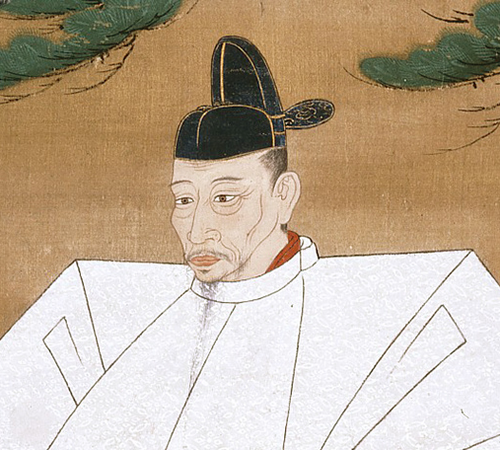
1557–1598
Toyotomi Hideyoshi
Hideyoshi completed Japan's unification in 1590, but he had voiced plans to conquer Ming China as early as 1585. He demanded Joseon's cooperation; Joseon rejected the demand, and in 1592 he invaded.
- 2
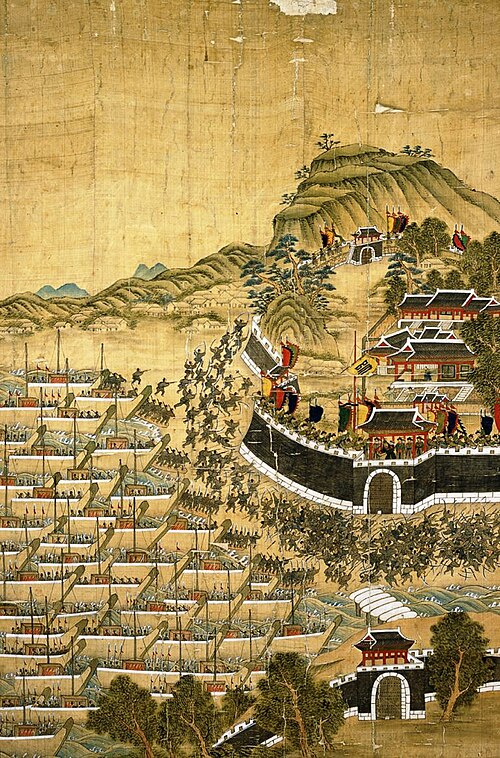
1592–1598
Japanese invasions of Korea (Imjin War)
The overview of the whole war: why it started, how it unfolded in two invasions (1592–1593 and 1597–1598), and what it cost. Read it first, or come back to it after the battles.
- 3
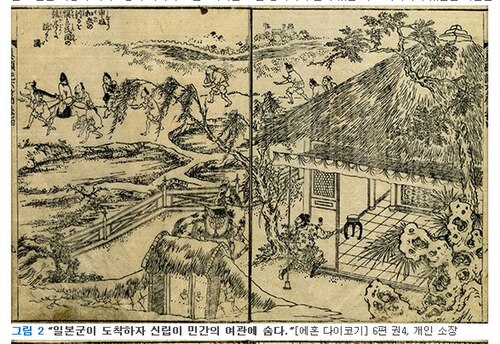
1592
Battle of Chungju (Tangeumdae, 1592)
About two weeks after landing at Busan, Japanese forces defeated Sin Rip's army at Chungju. The defeat opened the road to Hanyang, which fell days later.
- 4
1592
Battle of Hansan Island
While the Japanese armies pushed north on land, the Joseon fleet under Yi Sun-sin won at sea. In the summer of 1592 it defeated a large Japanese squadron off Hansan Island, helping keep the waters leading west under Joseon control.
- 5
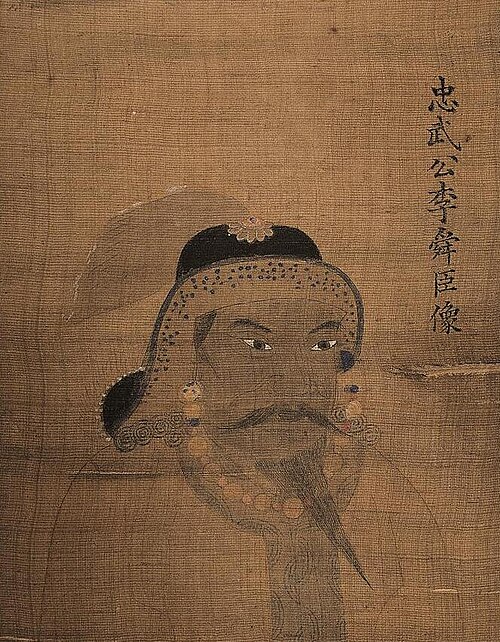
1592–1598 · Yeosu, Left Jeolla Naval Headquarters (Joseon)
Yi Sun-sin
Who was the admiral behind these victories? His life, his war diary and his turtle ships, and why he is remembered as he is today.
- 6
1592
First Siege of Jinju (1592)
In the autumn of 1592 the Japanese attacked the walled town of Jinju. Kim Si-min's defenders held it, protecting the grain-rich Jeolla Province behind it.
- 7
1593 · Yeoseongnyeong, south of the Byeokjegwan relay station, Goyang (Joseon)
Battle of Byeokjegwan
Early in 1593 a Ming army retook Pyongyang. Advancing on Hanyang, the Ming vanguard was beaten at Byeokjegwan, and the war turned into a stalemate and talks.
- 8
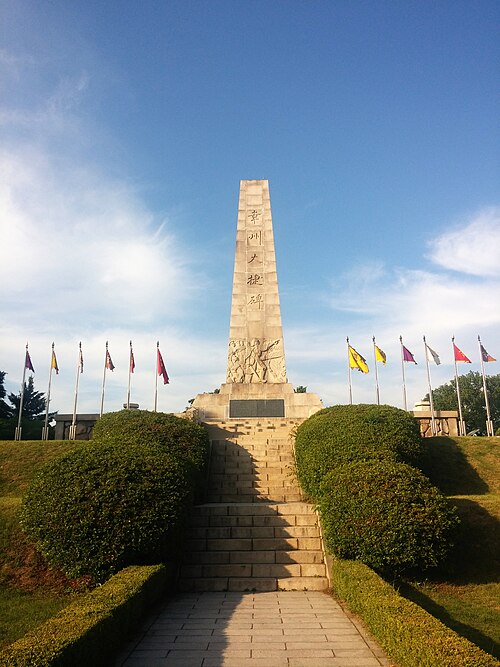
1593
Battle of Haengju
Soon after Byeokjegwan, Gwon Yul's troops and monk soldiers held a hilltop fort at Haengju against repeated Japanese assaults. About two months later, after peace negotiations, Japanese forces withdrew from Hanyang.
- 9
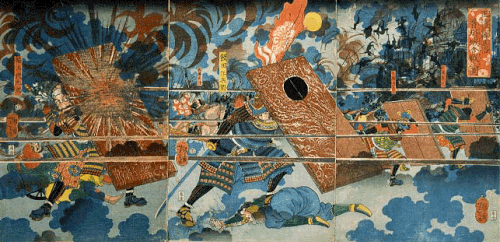
1593
Second Siege of Jinju (1593)
After Japanese forces withdrew to the south coast, Hideyoshi ordered revenge for their defeat at Jinju in 1592. In the summer of 1593 the town fell after a hard siege, with terrible losses.
- 10
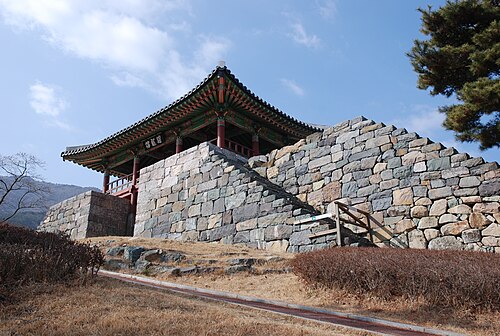
1597
Battle of Chilcheollyang
Peace talks between Ming and Japan broke down, and Japan invaded again in 1597. At Chilcheollyang, Won Gyun's Joseon fleet was almost destroyed.
- 11
1597
Siege of Namwon (1597)
With the sea route open, Japanese armies moved into Jeolla Province. Namwon, held by Joseon and Ming troops, fell after a few days of siege.
- 12
1597
Battle of Jiksan
Japanese forces advancing north clashed with Ming troops near Jiksan. The outcome is disputed. Japanese troops then raided Anseong and Juksan before withdrawing south without attacking Hanyang.
- 13
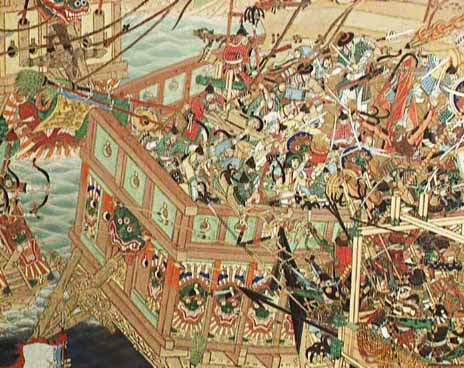
1597
Battle of Myeongnyang
After being restored to command, Yi Sun-sin gathered 13 warships and turned back a much larger Japanese fleet in the strong currents of Myeongnyang.
- 14
1598
First Siege of Ulsan
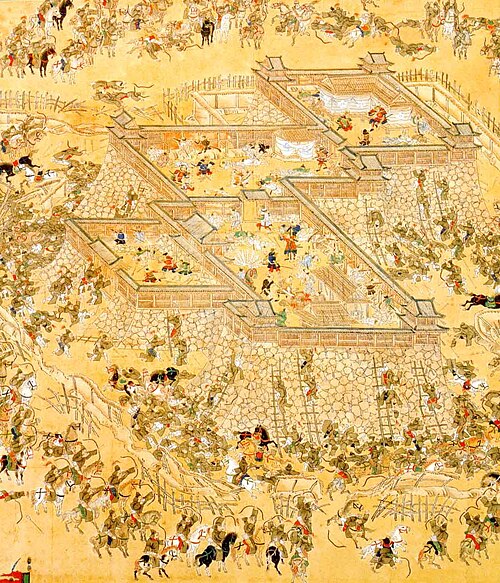
The Japanese dug in behind new castles on the south coast. In January–February 1598, Ming and Joseon forces besieged the Japanese castle at Ulsan but failed to capture it.
- 15
1598
Battle of Noryang
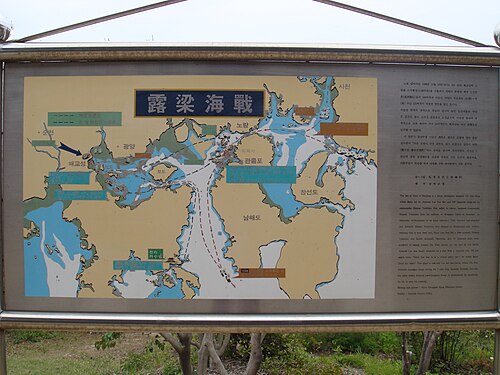
After Hideyoshi died in 1598, the Japanese began to withdraw. At Noryang the Joseon and Ming fleets fought one of the last battles of the war, and Yi Sun-sin was killed.
- 16
1607–1811 · Edo (Tokugawa Japan), reached from Hanseong (Joseon) by way of Busan and Tsushima
Joseon missions to Japan (Tongsinsa)
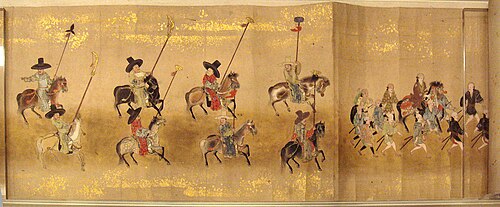
After the war, Joseon and the new Tokugawa shogunate restored relations in 1607. Twelve Joseon missions went to Japan between 1607 and 1811; the last one went only as far as Tsushima.
This course was written with the help of AI from the sources listed in each article.